
Mushrooms edible only after thorough cooking
Edible only after preparation — soaking, or boiling with the water thrown away. This is not a note about taste or caution: without that preparation these species cause poisoning.

Honey Fungus
Armillaria melleaEaten in some parts of Europe, but only after thorough cooking, and it does not agree with everyone. Raw or undercooked Honey Fungus can cause gastrointestinal illness, and some people react even to cooked mushrooms. It is not suitable for inexperienced foragers because other brown mushrooms grow on the same wood, including the deadly Funeral Bell. Do not use a single feature such as the ring to identify it.

Sheathed Woodtuft
Kuehneromyces mutabilisEdible, but not suitable for beginners. The deadly Funeral Bell (Galerina marginata) can grow on the same wood, at the same time, and can look very similar. The two may even occur close together. Do not rely on photographs or one field mark to separate them.
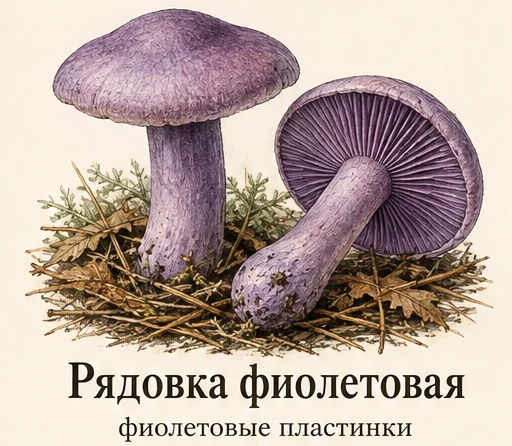
Wood Blewit
Collybia nudaEdible when correctly identified and thoroughly cooked; do not eat it raw. Several violet webcaps can look similar, and some Cortinarius species are seriously poisonous. Rusty-brown spore deposits or a cobweb-like veil are warning signs, but beginners should not use the absence of those features as proof that a mushroom is a Blewit.
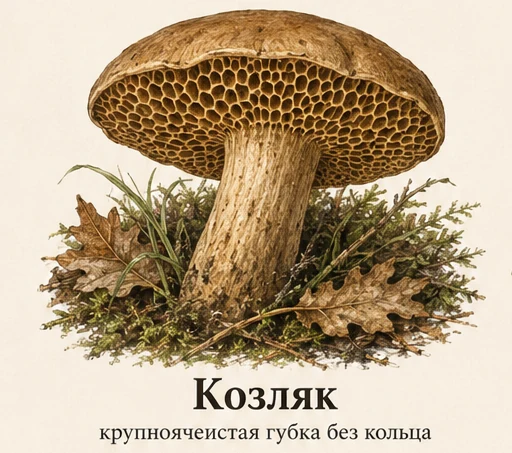
Bovine Bolete
Suillus bovinusEdible when correctly identified and cooked. The flesh may develop pinkish tones during cooking or after bruising; this is not in itself a sign of spoilage. Avoid old, waterlogged or decaying fruitbodies.

Black Morel
Morchella elataMorels must be cooked thoroughly and should never be eaten raw or undercooked. False morels can be dangerous and may appear at the same time of year. Cut a specimen lengthways as one useful check: true morels are hollow inside, while false morels usually have a more irregular, chambered interior. Do not rely on this feature alone.
Stinking Brittlegill
Russula foetensBritish and most western field guides treat this mushroom as inedible. Raw it is acrid and causes stomach upset, and old fruitbodies smell of rancid oil or fish. In Russia, eastern Europe and Scandinavia it is salted, but only after the skin is peeled off and the young unopened buttons are soaked in several changes of water for days and then boiled. Nothing on this page is a recommendation to eat it.