
Sheathed WoodtuftKuehneromyces mutabilis
Edible only after thorough cookingTraditionally collected in: Russia, Belarus, Poland and Germany
Description
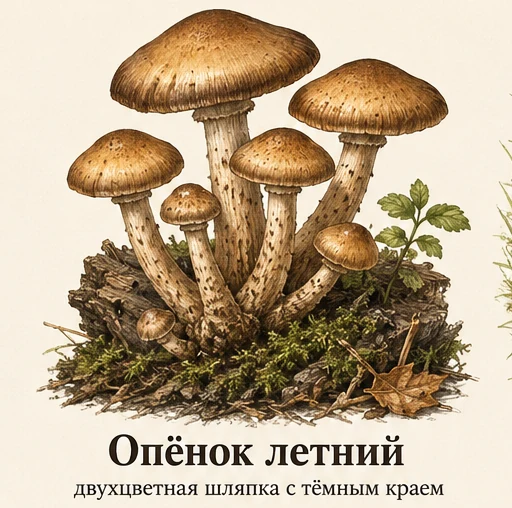
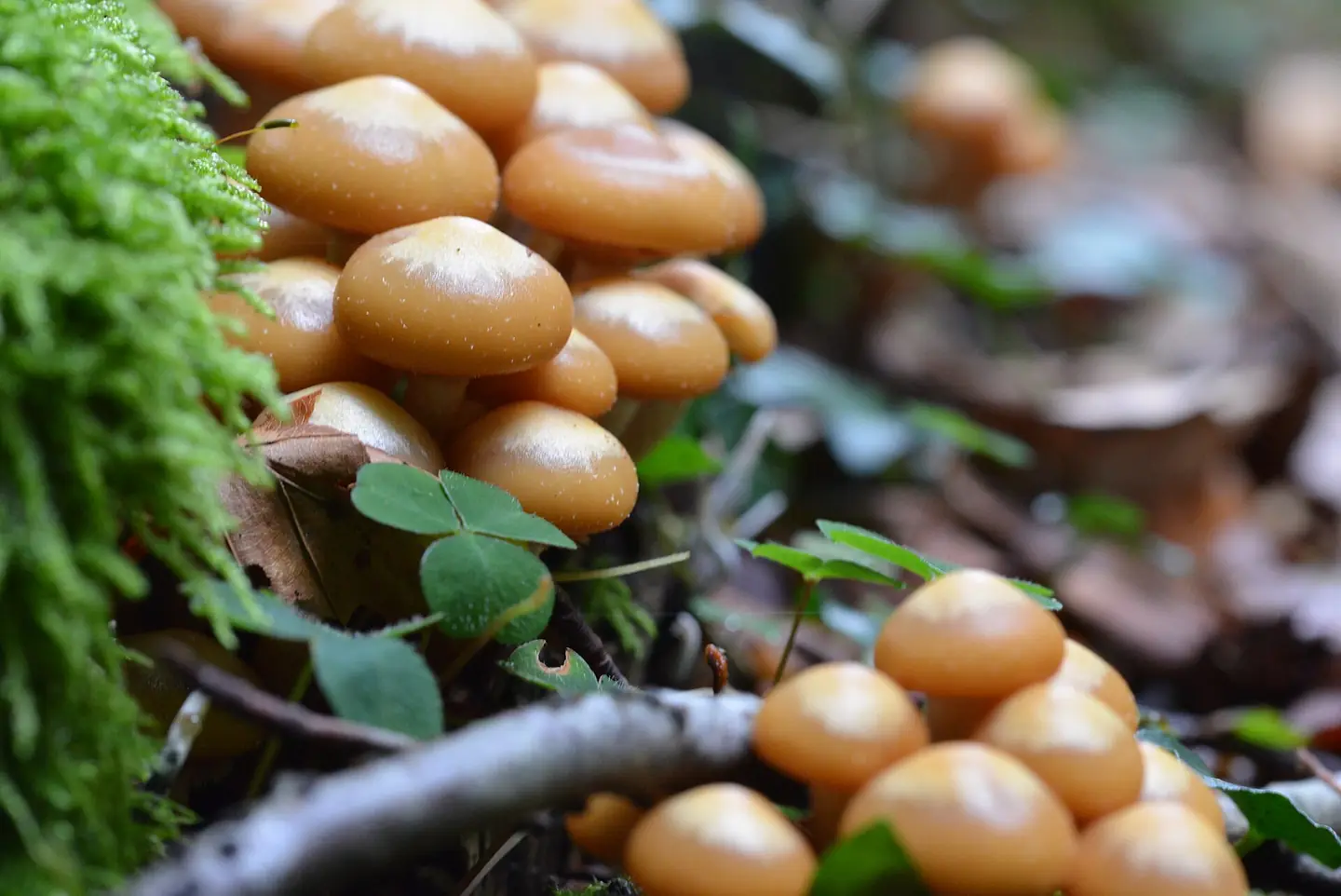
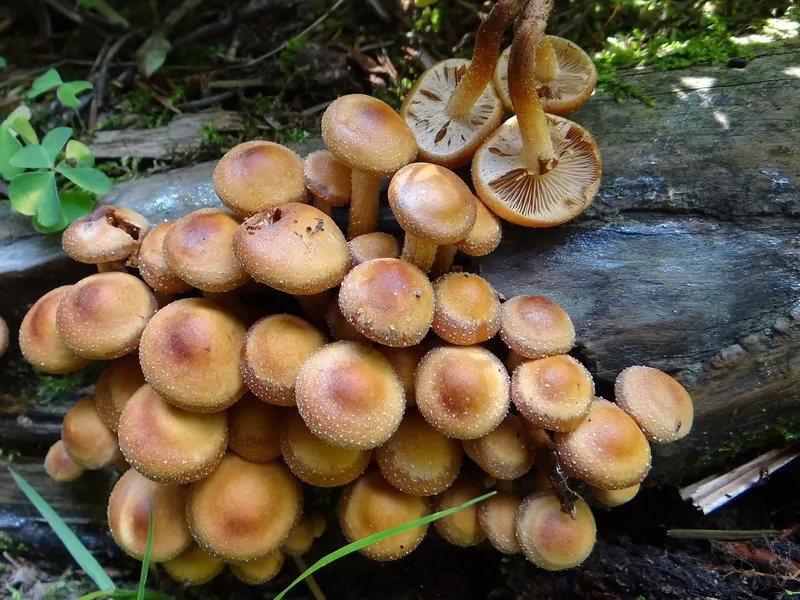
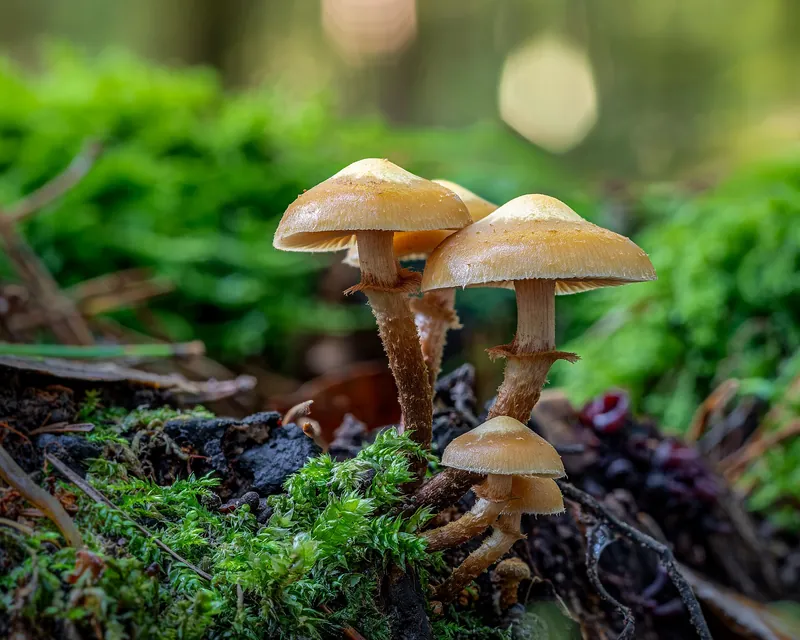
Grows in dense clusters on dead wood. The cap is often two-toned, with a darker wet-looking outer band in damp weather. A thin ring may be present on the stem, but it can disappear on older specimens.
Where it grows
Mostly on stumps and fallen wood of broadleaved trees, occasionally on conifers.
From spring or early summer into autumn, often producing several flushes after rain.
«Sheathed Woodtuft — or something like it?»
If the description above leaves you unsure, do not guess from memory and do not compare by eye with a picture off the internet. Our photo identifier shows several likely candidates with percentages, and names the dangerous lookalikes if there are any — rather than one confident answer.
In detail
Season
Fruits from early June to mid October.
What to do with it
This species may not be picked (see «Caution» below), so storing and cooking do not belong here. If you find one: photograph it where it stands, do not cut or dig it up, and remember the spot for your own records — the mycelium fruits there year after year.
Take care
Edible, but not suitable for beginners. The deadly Funeral Bell (Galerina marginata) can grow on the same wood, at the same time, and can look very similar. The two may even occur close together. Do not rely on photographs or one field mark to separate them.
This species is easily confused with Funeral Bell — see the lookalikes section below. Pick only what has been confirmed by someone who knows the fungi of your area.
Nothing on this page is an expert opinion, and nothing here confirms that the mushroom you found is edible. Photo identification in this service is a probabilistic hint, not permission to pick or to eat.
Lookalikes
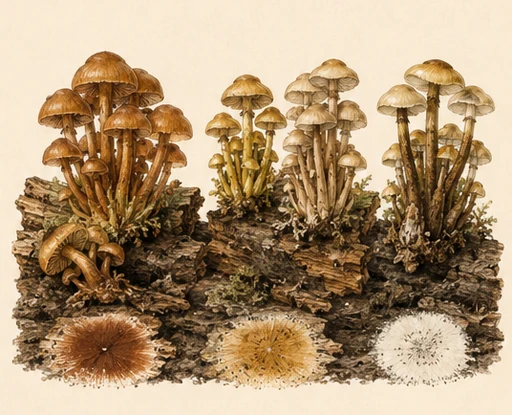
Deadly poisonous, carrying the same amatoxins as the Death Cap.
A photograph cannot settle this pair, and better image quality does not change that. Spore colour, which separates many brown mushrooms on wood, is no help here because both are brown-spored. The usable mark is the small dark scaling on the stem, and it is worn off by rain and handling and lost at the resolution of an ordinary photograph.
Check whether this one is out near you
The foraging forecast changes daily — with rainfall, temperature and the phase of the flush, rather than «it ought to be the season».
Your comment
No sign-up. A question, a correction, an observation — all welcome.
Updated from the FungRadar species reference · not a specialist's determination