
Are there mushrooms around Akhtubinsk right now
Today's index is 16 out of 100. It is quiet: the last few days of weather do not suit them. Look at the week below — it shows when that changes.
The forecast is computed at the nearest weather point — 8 km from the town. It is an estimate for the country around the town rather than a measurement in it: within half an hour's drive the weather barely changes, though any single wood can still go its own way. Data from 18 September 2026, 11:37 BST.
Akhtubinsk and the country around it
The ring marks Akhtubinsk, the dots are the rest of the measurement network in Astrakhan Oblast. The field between points is interpolated; clicking a point opens its town.
Nearest towns
The forecast in these towns can differ — the further away, the more. In brackets, the best edible species today.
The week, species by species
6 species are in season in Astrakhan Oblast right now — ordered by today's index. Another 1 species is out of season: the index reads zero all week.
Russula foetens
Russula foetens
Week's best 18average 16by the weekend steady
Conditions stay poor all week — not worth the trip yet.
- Today1618 Sept
- Sat1619 Sept
- Sun1620 Sept
- Mon1521 Sept
- Tue1522 Sept
- Wed1623 Sept
- Thu1824 Sept
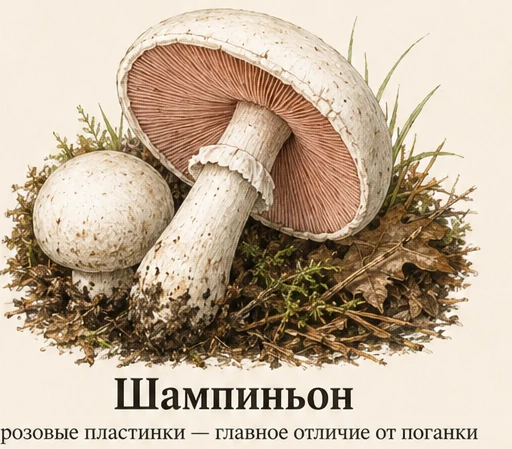
Agaricus campestris
Agaricus campestris
Week's best 23 — on Thursdayaverage 17by the weekend rising
Conditions are poor: even the week's best day only reaches «quiet».
- Today1518 Sept
- Sat1519 Sept
- Sun1520 Sept
- Mon1521 Sept
- Tue1622 Sept
- Wed1723 Sept
- Thu2324 Sept
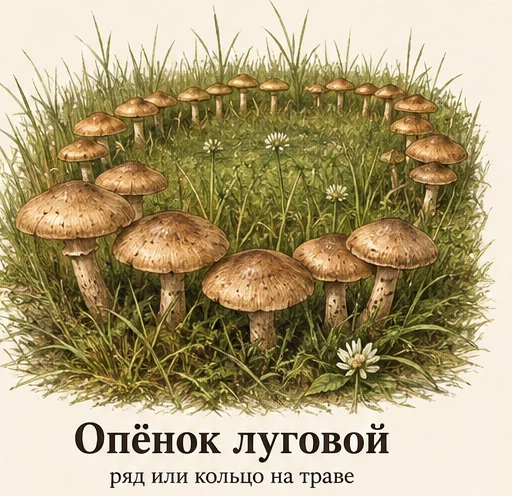
Marasmius oreades
Marasmius oreades
Week's best 22 — on Thursdayaverage 16by the weekend rising
Conditions are poor: even the week's best day only reaches «quiet».
- Today1418 Sept
- Sat1419 Sept
- Sun1420 Sept
- Mon1521 Sept
- Tue1522 Sept
- Wed1623 Sept
- Thu2224 Sept
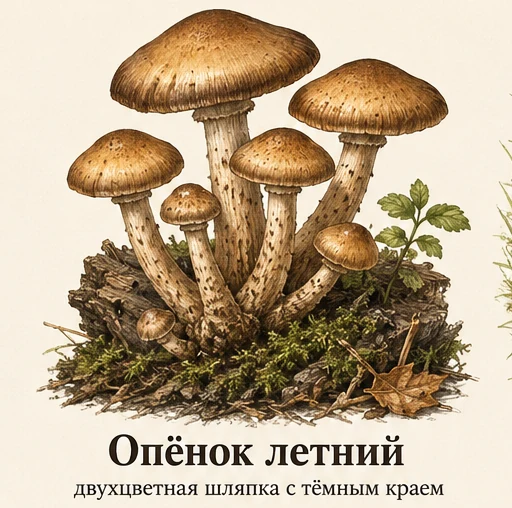
Kuehneromyces mutabilis
Kuehneromyces mutabilis
Week's best 18 — on Thursdayaverage 14by the weekend rising
Conditions are poor: even the week's best day only reaches «quiet».
- Today1318 Sept
- Sat1319 Sept
- Sun1320 Sept
- Mon1321 Sept
- Tue1322 Sept
- Wed1423 Sept
- Thu1824 Sept
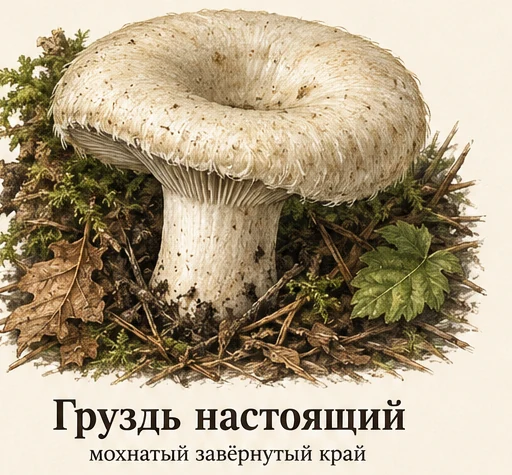
Lactarius resimus
Lactarius resimus
Week's best 11average 10by the weekend steady
Conditions stay poor all week — not worth the trip yet.
- Today1118 Sept
- Sat1119 Sept
- Sun1020 Sept
- Mon921 Sept
- Tue922 Sept
- Wed923 Sept
- Thu1124 Sept
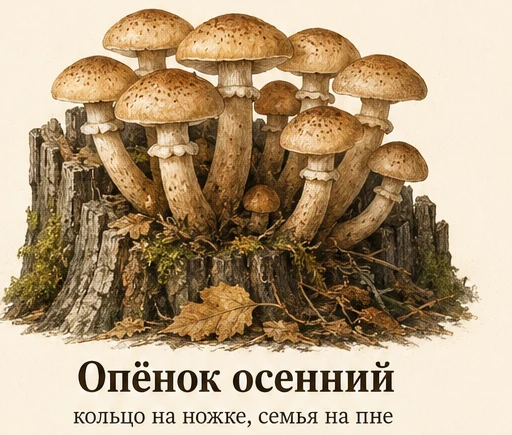
Armillaria mellea
Armillaria mellea
Week's best 13average 10by the weekend steady
Conditions stay poor all week — not worth the trip yet.
- Today918 Sept
- Sat919 Sept
- Sun1020 Sept
- Mon921 Sept
- Tue1022 Sept
- Wed1123 Sept
- Thu1324 Sept
The weather this number came from
On the left, what has already happened; on the right, what is expected. The left half matters more: a flush comes a week to ten days after the rain, not on the same day.
- 11 сент.18°—
- 12 сент.20°—
- 13 сент.22°—
- 14 сент.23°—
- 15 сент.22°0.2 mm
- 16 сент.20°—
- 17 сент.17°—
- 18 сент.17°—
- 19 сент.19°—
- 20 сент.19°—
- 21 сент.19°0.3 mm
- 22 сент.22°—
- 23 сент.22°3.9 mm
- 24 сент.16°15 mm
Russula foetens: the species in brief
How to tell it
A large brittlegill with a cap of eight to twelve centimetres, up to fifteen in big specimens. It is spherical at first and then flat, ochre yellow to yellowish brown, and very sticky in wet weather. Once open, the cap margin is plainly striate, with radial grooves running in from the edge. The gills are cream and crowded and weep droplets in damp weather, leaving brown spots behind. The stem is white with brown blotches, six to twelve centimetres, and hollows out with age. The flesh is white, browns where cut, and is brittle: it crumbles like any brittlegill rather than bending.
Where it grows
Mycorrhizal with both broadleaved trees and conifers. It keeps to shady, damp ground: wet birch and aspen woods, hollows, the edges of forest ditches. It often fruits in large troops and returns to the same spot year after year. The season runs from July into October, longer than that of most brittlegills.
This is a note about the species, not about what is in your basket. Full card with lookalikes →
What is recorded in Astrakhan Oblast
Species recorded within the region across all observations, from the most common to the rarest. Beside each one, the dates it is found here. Some are marked “by vegetation zone”: there are few records in this region itself, but enough in neighbouring ones with the same kind of woodland.
- Honey FungusEdible only after thorough cookingreported by readers
- Oyster Mushroomreported by readers
- Sheathed WoodtuftEdible only after thorough cookingreported by readers
- Field Mushroomreported by readers
- Fairy Ring Champignonreported by readers
- Stinking BrittlegillEdible only after thorough cookingreported by readers
Occurrence data comes from GBIF, an open database of biodiversity observations. These are records made by people, not a census of fungi: where there are more naturalists, there are more records. So the number says how often a species turns up in reports, not how much of it is in the woods.
Been out in Akhtubinsk? Tell us how it went
No sign-up, five seconds. Reports are visible to everyone and help us check the forecast — where people say “nothing out there” and the model promises a flush, the model is wrong.
Common questions
Are there mushrooms in Akhtubinsk in September 2026?
Today's foraging index is 16 out of 100. It is built from two weeks of rainfall, soil temperature, the length of the dry spell and each species' season, and it updates daily.
Which mushrooms are picked around Akhtubinsk?
Records gathered in this region most often list: honey fungus, oyster mushroom, sheathed woodtuft. The full list with seasons is in the block above.
How accurate is this forecast?
It is a model of weather and season, not an observation of the wood. It answers «is this week worth a trip» well, and it does not know what is growing round the next bend. We measure its accuracy against independent records and publish the result — without that number a forecast stays a promise.
The index is high but I found nothing — why?
The index reads weather and season — things that are the same for tens of kilometres around. It does not know your particular wood, and that is where the mushroom grows. The usual reasons: wrong trees — every species has its own, and no weather makes up for the wrong stand; the wood was felled recently or is young — the mycelium takes years to recover; the spot is picked out — everything near a road or a car park goes over a weekend; the flush has been taken — you came a day after those who came on time; or the flush passed and slugs and larvae got there first, which the model cannot see. The reverse holds too: a low index does not mean an empty wood. It means the conditions are against you, not that there is nothing there.