
Oyster MushroomPleurotus ostreatus
Traditionally collected in: Italy, France, Germany, Poland, Russia, the United Kingdom and Hungary
Description
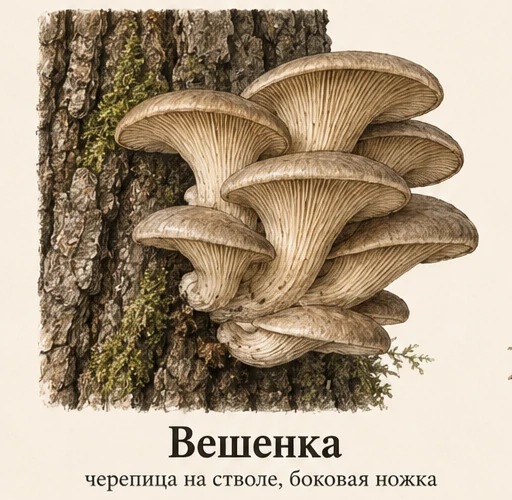
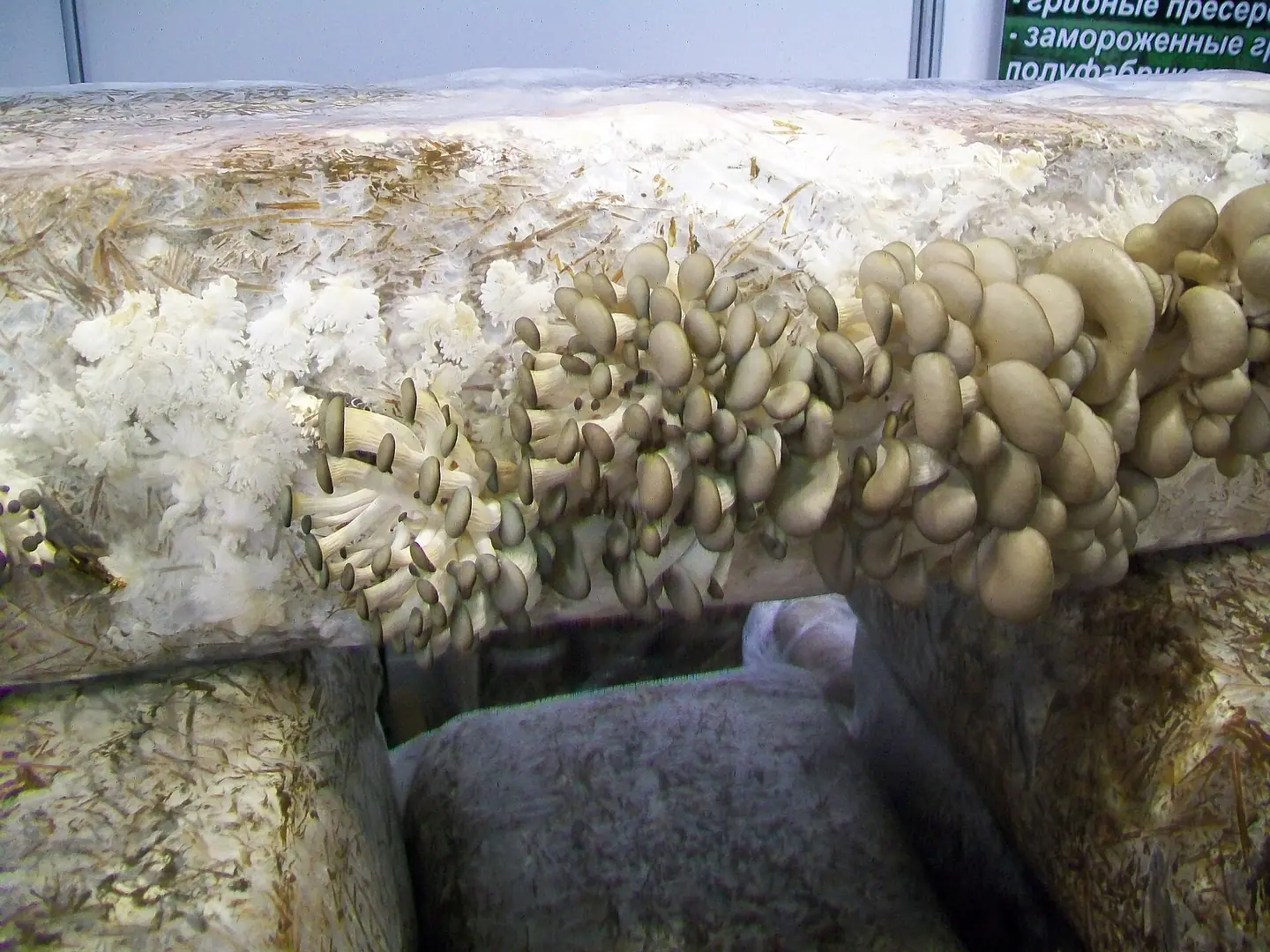
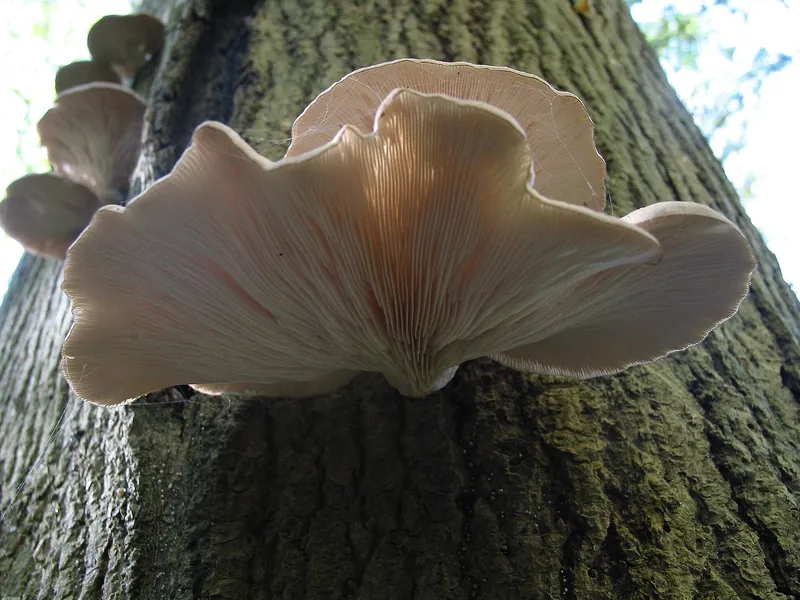
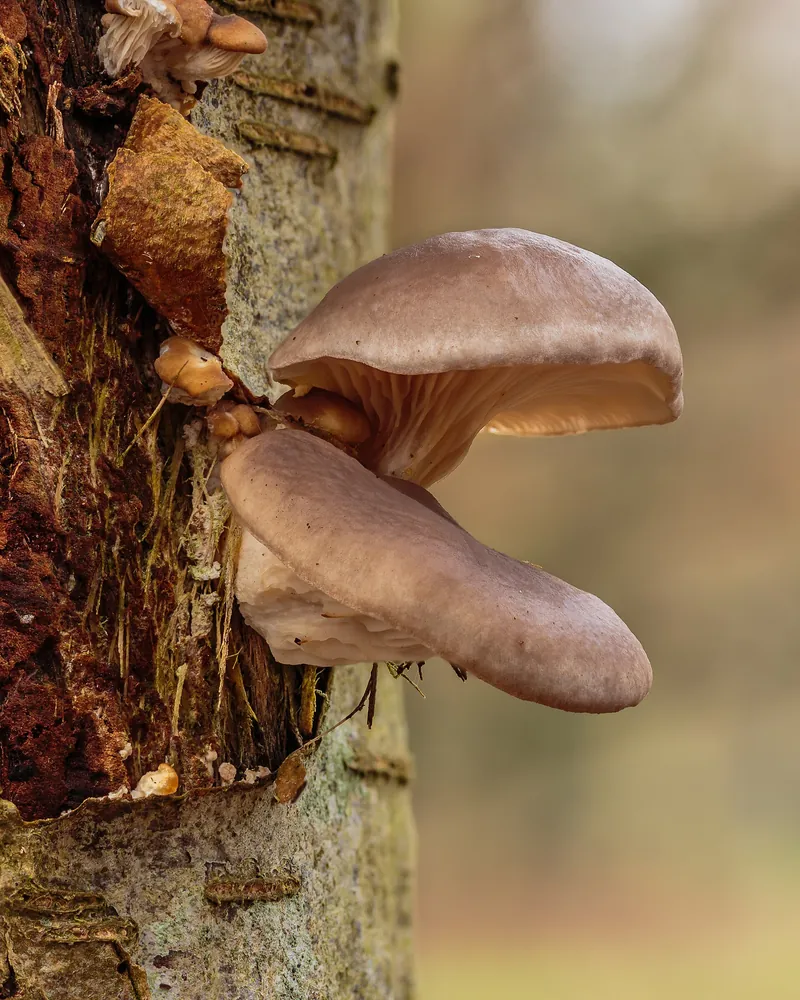
Grows in overlapping shelves on trunks and stumps. The caps are shell-shaped, usually grey to blue-grey, with pale gills running down onto a short, off-centre stem.
Where it grows
Mostly on dead or weakened broadleaved trees, including beech, willow and poplar.
Mainly in cool, damp weather from autumn into winter, with additional flushes during mild spells.
«Oyster Mushroom — or something like it?»
If the description above leaves you unsure, do not guess from memory and do not compare by eye with a picture off the internet. Our photo identifier shows several likely candidates with percentages, and names the dangerous lookalikes if there are any — rather than one confident answer.
In detail
Season
Fruits from early October to late March.
What to do with it
This species may not be picked (see «Caution» below), so storing and cooking do not belong here. If you find one: photograph it where it stands, do not cut or dig it up, and remember the spot for your own records — the mycelium fruits there year after year.
Take care
Edible when correctly identified and cooked. In parts of northern Europe and upland Britain it can share habitat with Angel's Wings, a thinner, paler species usually found on conifers. Tree type is an important clue, but it should not be the only check.
Nothing on this page is an expert opinion, and nothing here confirms that the mushroom you found is edible. Photo identification in this service is a probabilistic hint, not permission to pick or to eat.
Lookalikes
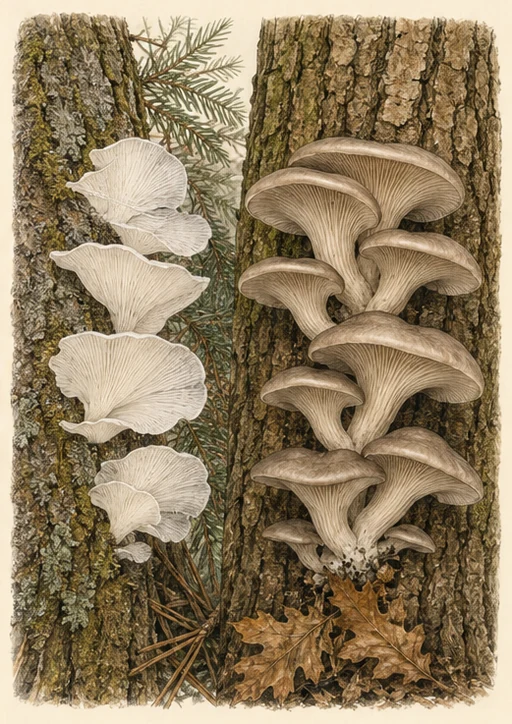
Linked to cases of severe encephalopathy, chiefly in people with impaired kidney function, and no longer treated as a food mushroom.
- ·Look at the wood first: Angel's Wings grows on conifers, above all on rotting spruce and pine, while Oyster Mushroom is on broadleaved trees such as beech, willow, poplar and elm.
- ·Angel's Wings is thin, pure white and almost translucent when held up to the light; Oyster Mushroom is thick and fleshy and grey, blue-grey or fawn.
- ·Angel's Wings has effectively no stem and is attached to the wood at a narrow point; Oyster Mushroom usually has a short, firm, off-centre stem.
- ·Angel's Wings fruitbodies are small, seldom more than a hand's width, and crowd in overlapping tiers on well-rotted conifer logs, mostly in northern and upland forests.
Check whether this one is out near you
The foraging forecast changes daily — with rainfall, temperature and the phase of the flush, rather than «it ought to be the season».
Your comment
No sign-up. A question, a correction, an observation — all welcome.
Updated from the FungRadar species reference · not a specialist's determination