
Velvet Shank in Nordjylland: the week ahead
Flammulina velutipes
The map below is built from the measurement network. A 2.5 km grid with a per-species layer is computed for one region so far.
Flush phase
- Quiet
- Starting
- Building
- Peak
- Fading
Updated 18 September 2026, 11:37 BST
7 days
Index, day by day
Zero all week: this species is not fruiting now.
Map
Where to look: velvet shank
A field over the measurement network. The colour here is for the leading species at each point, not for this one; a per-species layer is computed for one region so far.
Velvet Shank in Nordjylland: where to look
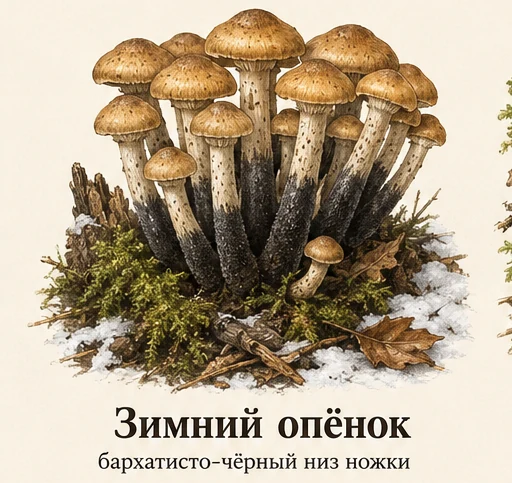
Velvet Shank: the species in brief
How to tell it
Grows in clusters on wood. The cap is honey-yellow to orange-brown and often shiny or sticky when wet. The lower stem becomes dark brown to almost black and feels velvety.
Where it grows
On stumps and trunks of broadleaved trees, especially willow, poplar and elm.
In the kitchen
Cook thoroughly. The caps are more tender than the stems, which are often discarded on mature fruitbodies.
Nutrition
Low in calories. Its main attraction to foragers is its winter season.
This is a note about the species, not about what is in your basket. Full card with lookalikes →
What else is out here now
The other species in this region, by today's index.
Velvet Shank in neighbouring regions
A regional boundary means nothing to a mushroom, and the next region is sometimes closer than the far side of your own. The index is for today.