
Velvet ShankFlammulina velutipes
Traditionally collected in: Russia, Italy and Poland
Description
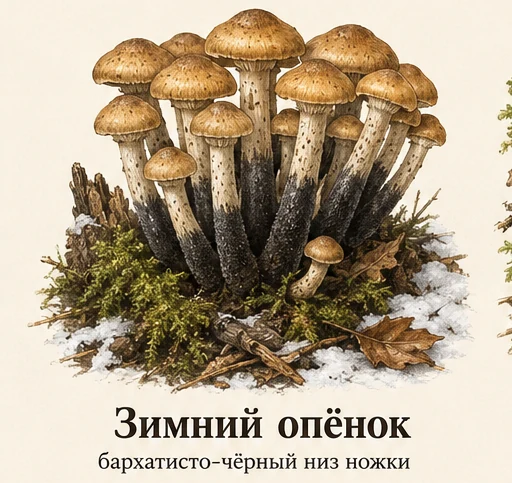
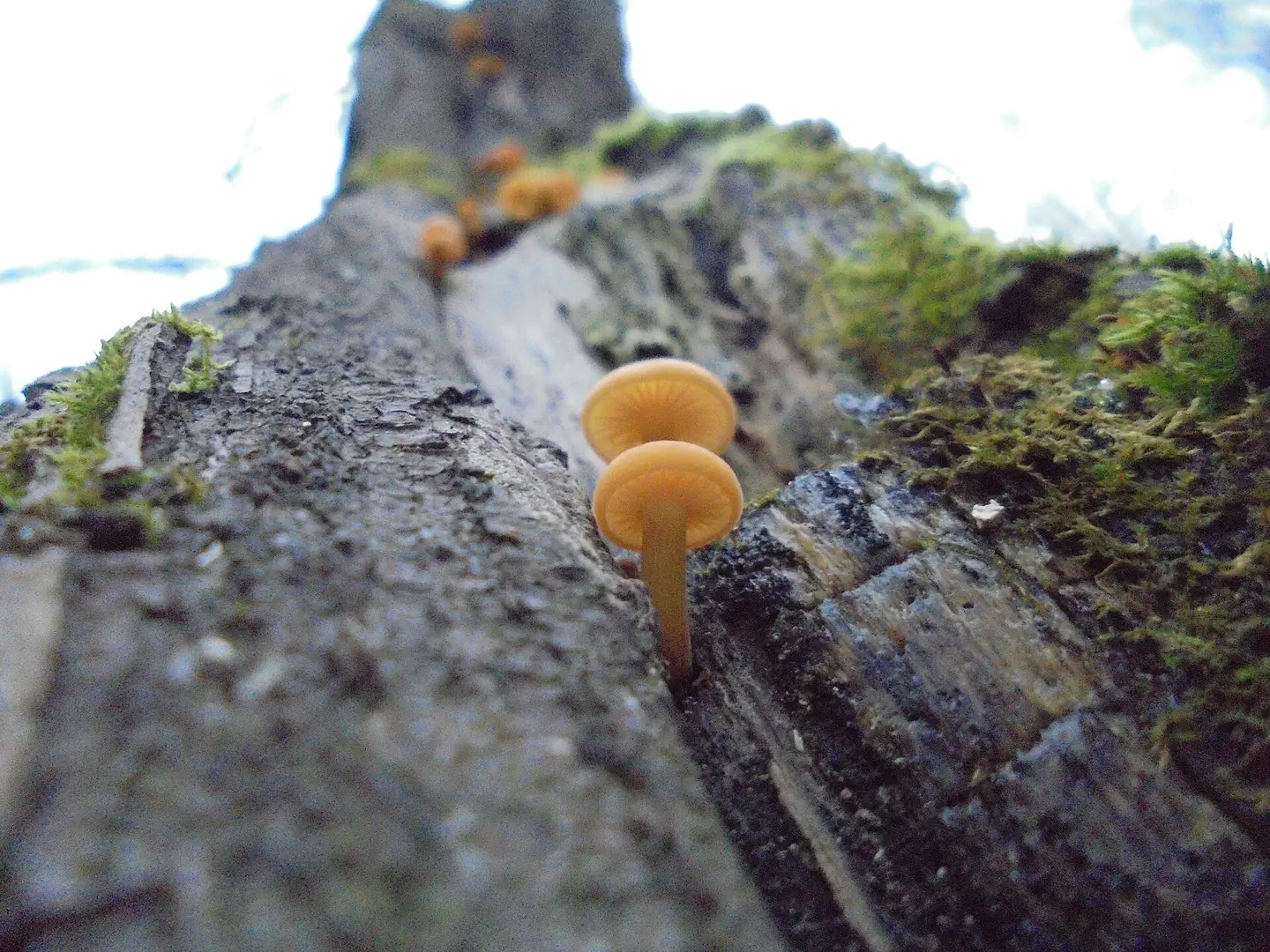
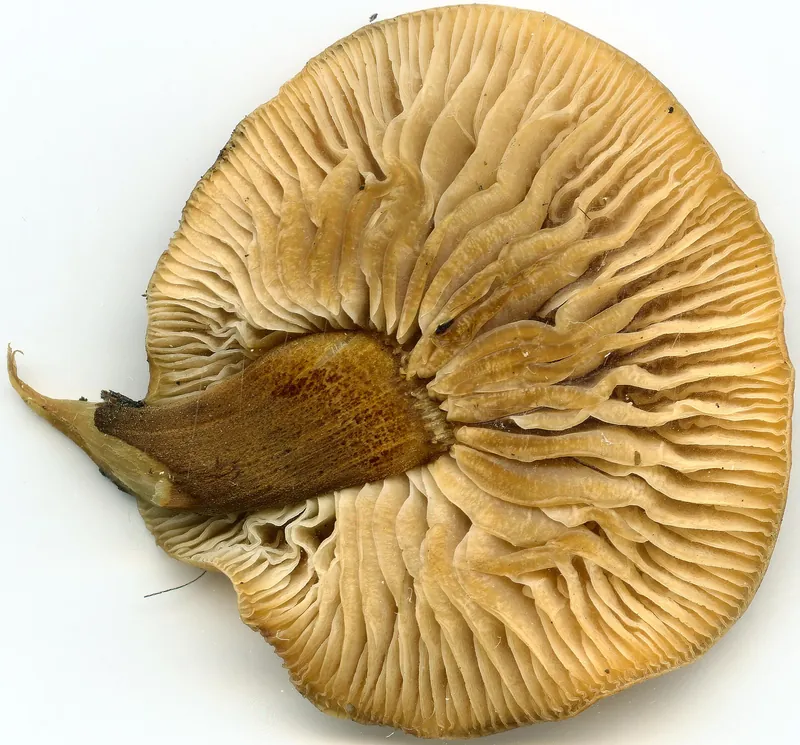
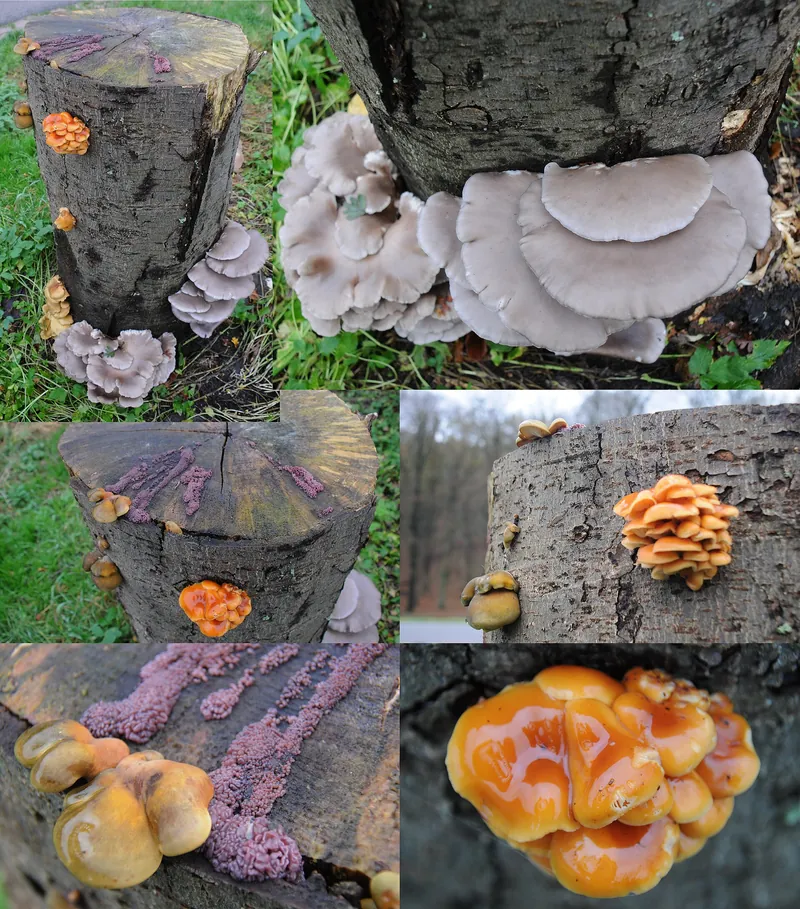
Grows in clusters on wood. The cap is honey-yellow to orange-brown and often shiny or sticky when wet. The lower stem becomes dark brown to almost black and feels velvety.
Where it grows
On stumps and trunks of broadleaved trees, especially willow, poplar and elm.
Mainly from late autumn through winter and into early spring during mild spells.
«Velvet Shank — or something like it?»
If the description above leaves you unsure, do not guess from memory and do not compare by eye with a picture off the internet. Our photo identifier shows several likely candidates with percentages, and names the dangerous lookalikes if there are any — rather than one confident answer.
In detail
Season
Fruits from early November to late February.
What to do with it
This species may not be picked (see «Caution» below), so storing and cooking do not belong here. If you find one: photograph it where it stands, do not cut or dig it up, and remember the spot for your own records — the mycelium fruits there year after year.
Take care
Edible when correctly identified and cooked, but it grows on wood alongside other small brown mushrooms, including the deadly Funeral Bell. Velvet Shank usually has no ring and has a dark, velvety lower stem. Funeral Bell often shows rusty-brown spores and a ring zone. These clues are not enough for a beginner to make a safe identification.
This species is easily confused with Funeral Bell — see the lookalikes section below. Pick only what has been confirmed by someone who knows the fungi of your area.
Nothing on this page is an expert opinion, and nothing here confirms that the mushroom you found is edible. Photo identification in this service is a probabilistic hint, not permission to pick or to eat.
Lookalikes
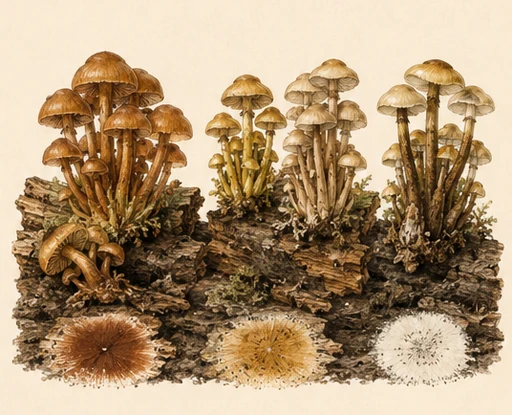
Deadly poisonous, amatoxin-bearing, and able to fruit on wood in the same mild winter spells.
A photograph cannot settle this pair. The velvety black stem base is the mark most often quoted and the one a picture most often gets wrong: young fruitbodies have not darkened yet, and in a tight tuft the stems are buried and invisible. The winter season does not narrow it either, because Funeral Bell also fruits late.
Check whether this one is out near you
The foraging forecast changes daily — with rainfall, temperature and the phase of the flush, rather than «it ought to be the season».
Your comment
No sign-up. A question, a correction, an observation — all welcome.
Updated from the FungRadar species reference · not a specialist's determination