
Brown Birch Bolete in Uppsala: the week ahead
Leccinum scabrum
The map below is built from the measurement network. A 2.5 km grid with a per-species layer is computed for one region so far.
Flush phase
- Quiet
- Starting
- Building
- Peak
- Fading
Updated 18 September 2026, 11:37 BST
7 days
Index, day by day
Week's best 60 — on Mondayaverage 57by the weekend falling
Conditions are best on Monday.
- Today5818 Sept
- Sat5919 Sept
- Sun5920 Sept
- Mon6021 Sept
- Tue5722 Sept
- Wed5423 Sept
- Thu5324 Sept
Map
Where to look: brown birch bolete
A field over the measurement network. The colour here is for the leading species at each point, not for this one; a per-species layer is computed for one region so far.
Brown Birch Bolete in Uppsala: where to look
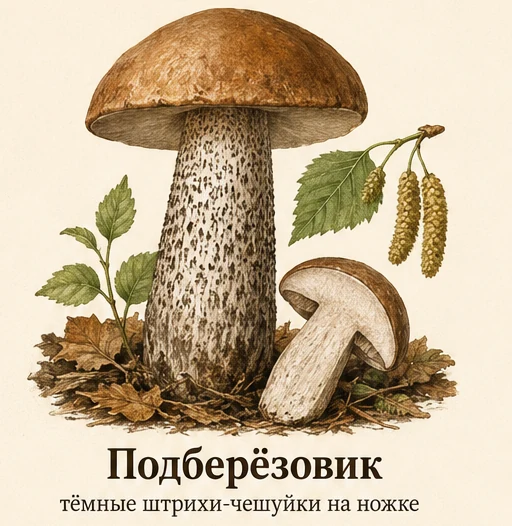
Brown Birch Bolete: the species in brief
How to tell it
A slender bolete with a grey-brown to brown cap and a pale stem covered in dark scab-like scales. The flesh may slowly turn grey after cutting.
Where it grows
Always associated with birch. It occurs in woodland, heaths, parks and along woodland rides wherever birch is established.
In the kitchen
Good fried, in soups or dried. Older pore layers are often removed because they become soft during cooking.
Nutrition
Low in calories with a modest amount of protein.
This is a note about the species, not about what is in your basket. Full card with lookalikes →
What else is out here now
The other species in this region, by today's index.
Brown Birch Bolete in neighbouring regions
A regional boundary means nothing to a mushroom, and the next region is sometimes closer than the far side of your own. The index is for today.