
Brown Birch BoleteLeccinum scabrum
Traditionally collected in: Russia, Belarus, Poland, Finland, Sweden, Lithuania, Latvia and Estonia
Description
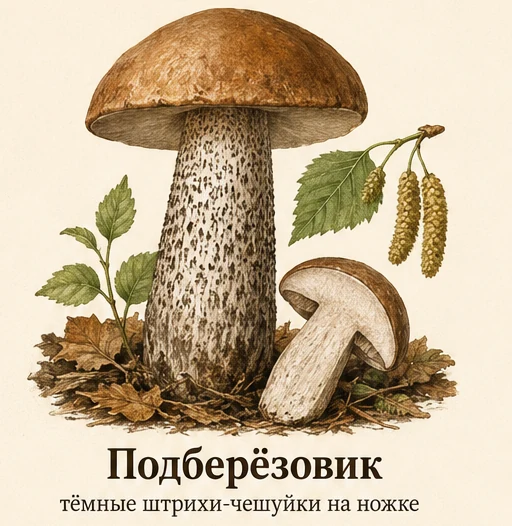
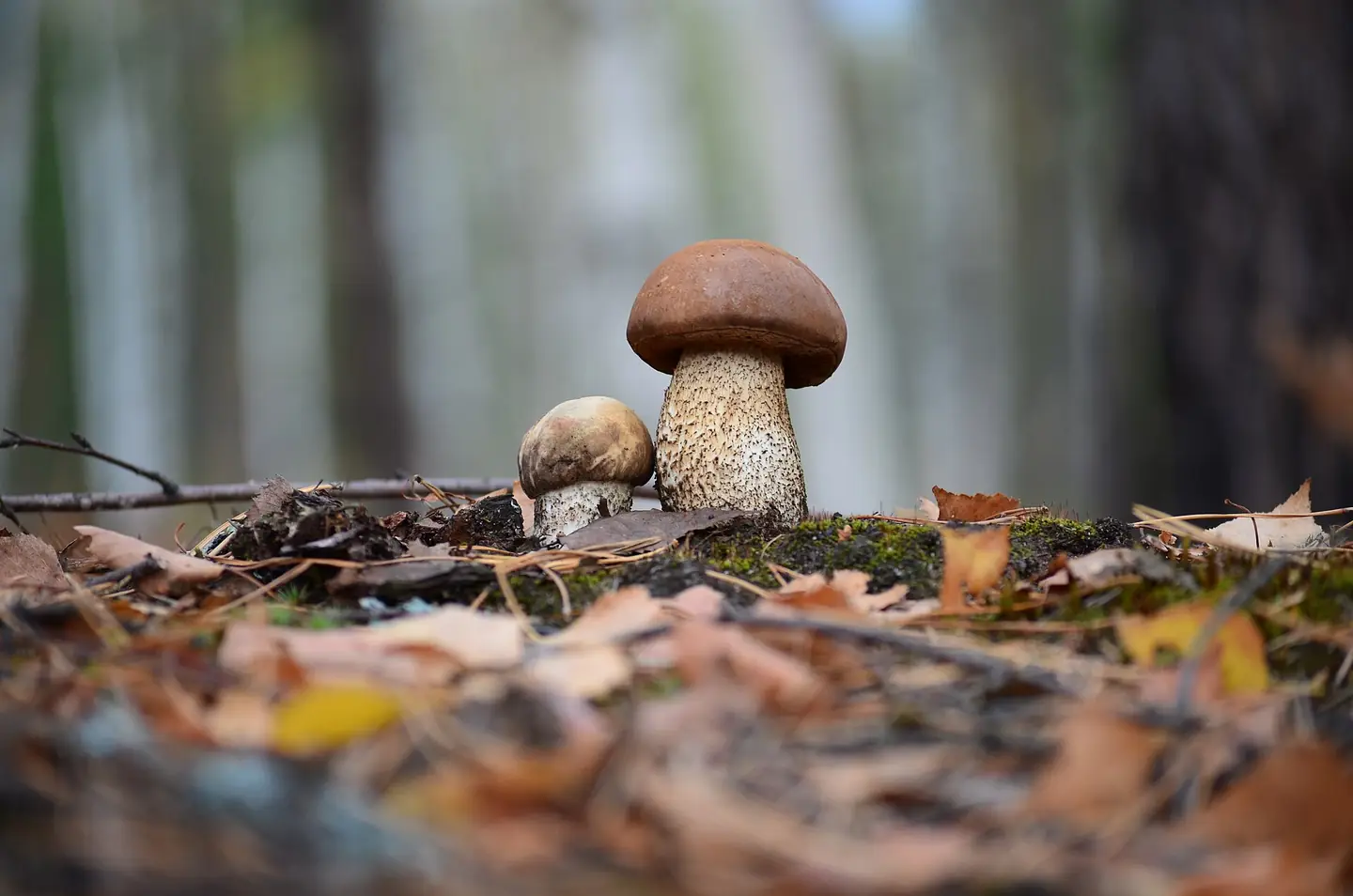
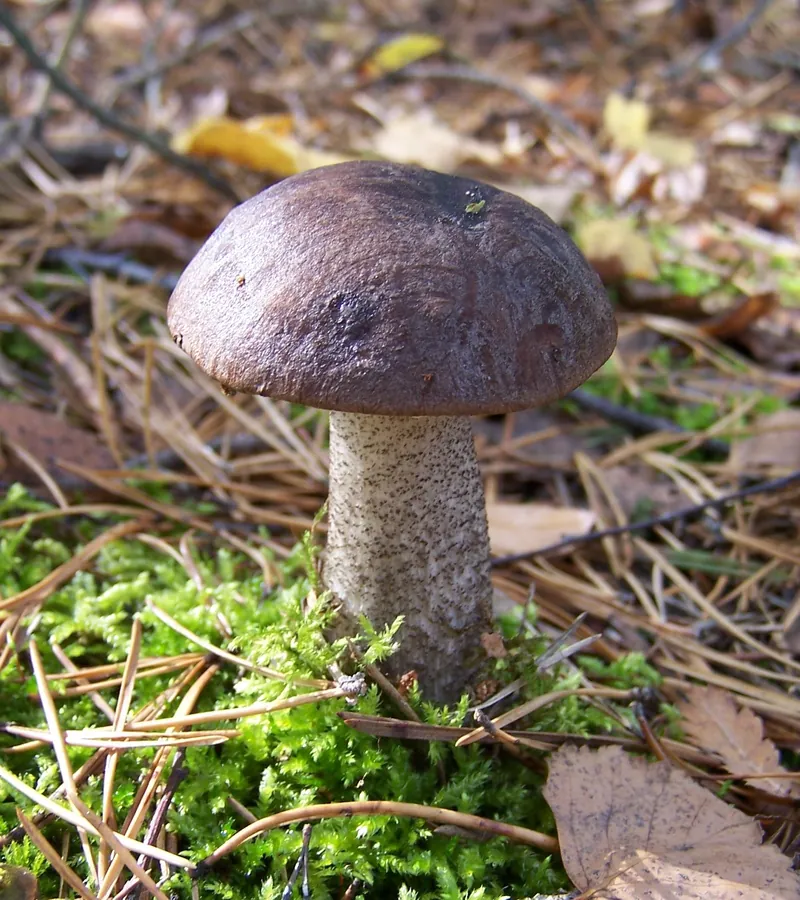
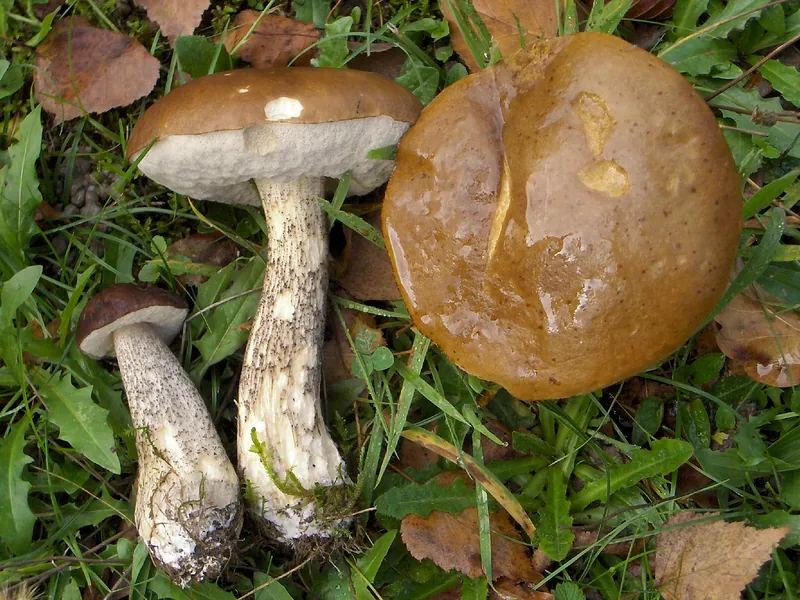
A slender bolete with a grey-brown to brown cap and a pale stem covered in dark scab-like scales. The flesh may slowly turn grey after cutting.
Where it grows
Always associated with birch. It occurs in woodland, heaths, parks and along woodland rides wherever birch is established.
From early summer into autumn. It often appears soon after warm, wet weather and can fruit several times in a season.
«Brown Birch Bolete — or something like it?»
If the description above leaves you unsure, do not guess from memory and do not compare by eye with a picture off the internet. Our photo identifier shows several likely candidates with percentages, and names the dangerous lookalikes if there are any — rather than one confident answer.
In detail
Season
Fruits from early June to early November.
What to do with it
This species may not be picked (see «Caution» below), so storing and cooking do not belong here. If you find one: photograph it where it stands, do not cut or dig it up, and remember the spot for your own records — the mycelium fruits there year after year.
Take care
Edible when correctly identified and thoroughly cooked. Older specimens become soft and spongy and are often damaged by larvae, so young, firm fruitbodies are preferable.
Nothing on this page is an expert opinion, and nothing here confirms that the mushroom you found is edible. Photo identification in this service is a probabilistic hint, not permission to pick or to eat.
Lookalikes
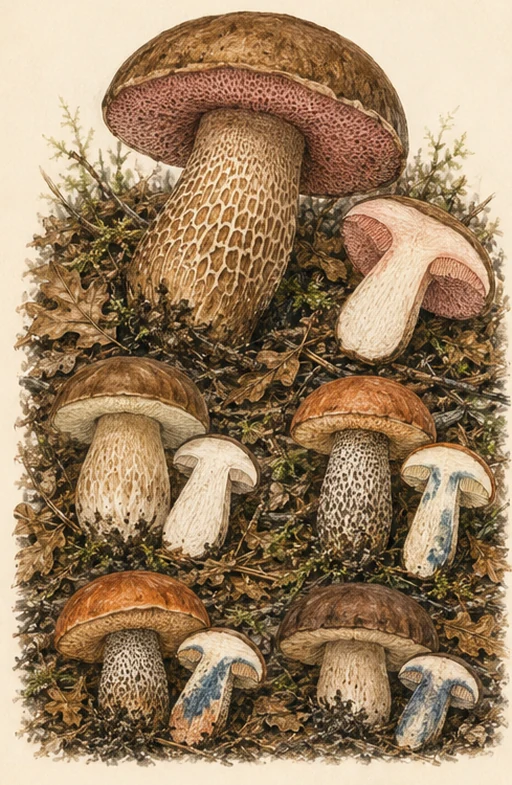
Not poisonous, but bitter beyond use, and boiling does not take the bitterness out.
- ·The pore surface of Bitter Bolete turns pink with age, while that of Brown Birch Bolete stays white and then dingy grey and never pinks.
- ·The stem of Bitter Bolete carries a raised dark net; the stem of Brown Birch Bolete carries dark scab-like scales laid on a pale ground, which is a different pattern altogether once you look closely.
- ·Cut flesh of Bitter Bolete flushes faintly pink; Brown Birch Bolete stays whitish or slowly turns grey.
- ·Brown Birch Bolete is always with birch, while Bitter Bolete favours acid soil with conifers and old stumps, though it also occurs with beech and oak.
Check whether this one is out near you
The foraging forecast changes daily — with rainfall, temperature and the phase of the flush, rather than «it ought to be the season».
Your comment
No sign-up. A question, a correction, an observation — all welcome.
Updated from the FungRadar species reference · not a specialist's determination