
Parasol in Saare: the week ahead
Macrolepiota procera
The map below is built from the measurement network. A 2.5 km grid with a per-species layer is computed for one region so far.
Flush phase
- Quiet
- Starting
- Building
- Peak
- Fading
Updated 18 September 2026, 11:37 BST
7 days
Index, day by day
Week's best 63 — on Mondayaverage 60by the weekend rising
Conditions are best on Monday.
- Today5618 Sept
- Sat5919 Sept
- Sun5820 Sept
- Mon6321 Sept
- Tue6322 Sept
- Wed6123 Sept
- Thu6224 Sept
Map
Where to look: parasol
A field over the measurement network. The colour here is for the leading species at each point, not for this one; a per-species layer is computed for one region so far.
Parasol in Saare: where to look
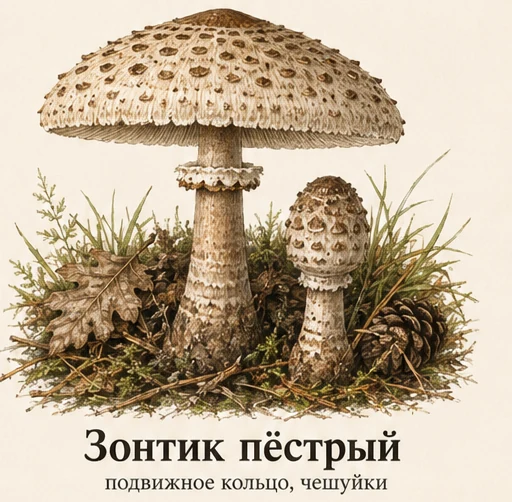
Parasol: the species in brief
How to tell it
A tall mushroom with a broad cap covered in brown scales on a pale background. The stem has a snakeskin-like pattern and a thick ring that is often movable. Mature specimens are large and distinctive, but no single feature should be used on its own.
Where it grows
On woodland edges, in clearings, parks, pasture and grassy commons.
In the kitchen
The cap is the part usually eaten; the stem is fibrous. Large caps are often breaded and fried or cooked whole.
Nutrition
Low in calories with a modest protein content.
This is a note about the species, not about what is in your basket. Full card with lookalikes →
What else is out here now
The other species in this region, by today's index.
Parasol in neighbouring regions
A regional boundary means nothing to a mushroom, and the next region is sometimes closer than the far side of your own. The index is for today.