
Chanterelle in Dytiki Ellada: the week ahead
Cantharellus cibarius
The map below is built from the measurement network. A 2.5 km grid with a per-species layer is computed for one region so far.
Flush phase
- Quiet
- Starting
- Building
- Peak
- Fading
Updated 17 September 2026, 11:22 BST
7 days
Index, day by day
Week's best 4average 4by the weekend steady
Conditions stay poor all week — not worth the trip yet.
- Today417 Sept
- Fri418 Sept
- Sat419 Sept
- Sun420 Sept
- Mon421 Sept
- Tue422 Sept
- Wed423 Sept
Map
Where to look: chanterelle
A field over the measurement network. The colour here is for the leading species at each point, not for this one; a per-species layer is computed for one region so far.
Chanterelle in Dytiki Ellada: where to look
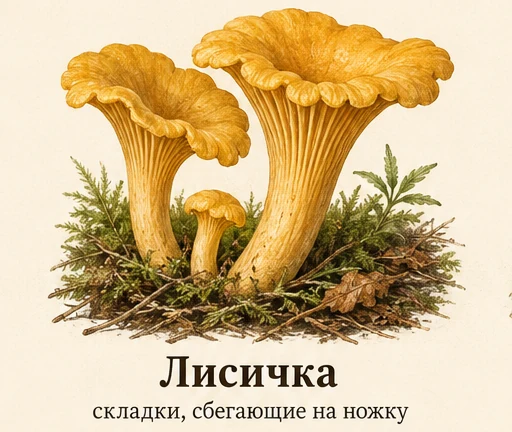
Chanterelle: the species in brief
How to tell it
Yellow to apricot throughout, with a wavy cap and firm flesh. The ridges under the cap are thick, blunt and forked. The smell is often fruity, sometimes compared with apricots.
Where it grows
In coniferous, broadleaved and mixed woodland, usually among moss or leaf litter. Good patches often fruit repeatedly over many years.
In the kitchen
Excellent fried and widely used with cream, butter or eggs. They do not dry as well as many boletes because the texture can become tough.
Nutrition
Low in calories. Chanterelles can contain vitamin D2, although the amount varies greatly.
This is a note about the species, not about what is in your basket. Full card with lookalikes →
What else is out here now
The other species in this region, by today's index.
Chanterelle in neighbouring regions
A regional boundary means nothing to a mushroom, and the next region is sometimes closer than the far side of your own. The index is for today.