
ChanterelleCantharellus cibarius
Traditionally collected in: France, Italy, Germany, Poland, Sweden, Finland, Russia, Belarus and the United Kingdom
Description
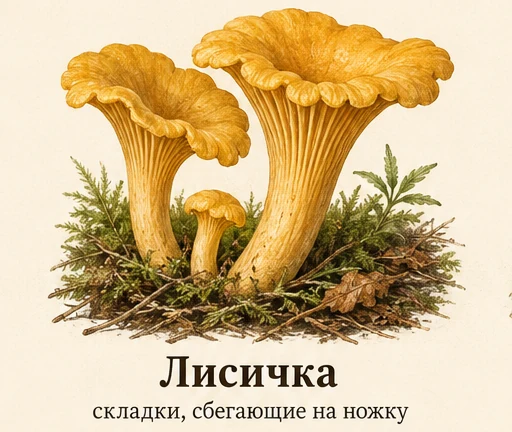
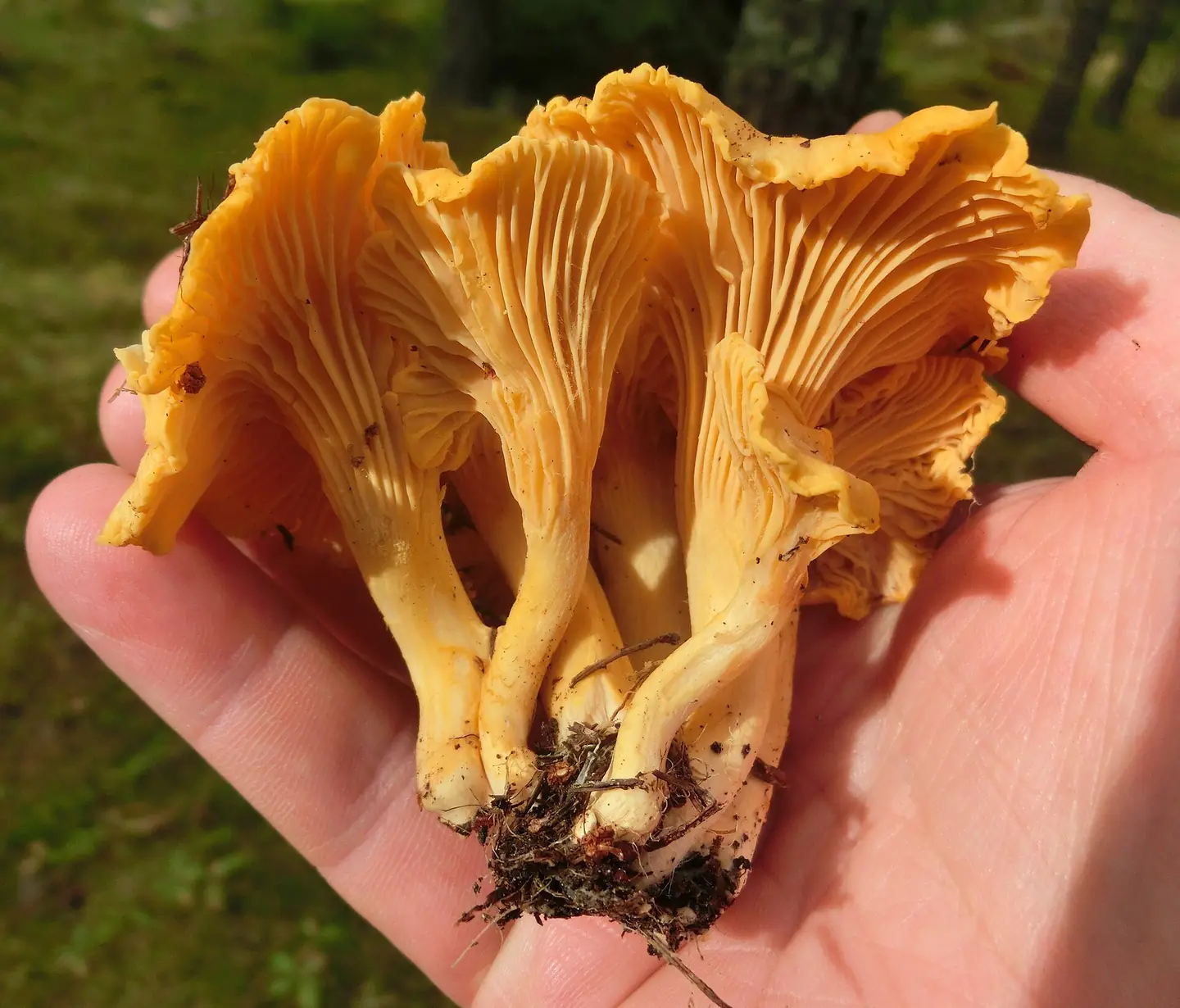
Yellow to apricot throughout, with a wavy cap and firm flesh. The ridges under the cap are thick, blunt and forked. The smell is often fruity, sometimes compared with apricots.
Where it grows
In coniferous, broadleaved and mixed woodland, usually among moss or leaf litter. Good patches often fruit repeatedly over many years.
Mainly from summer into autumn. Chanterelles usually respond better to a sustained wet period than to one short shower.
«Chanterelle — or something like it?»
If the description above leaves you unsure, do not guess from memory and do not compare by eye with a picture off the internet. Our photo identifier shows several likely candidates with percentages, and names the dangerous lookalikes if there are any — rather than one confident answer.
In detail
Season
Fruits from early June to early November.
What to do with it
This species may not be picked (see «Caution» below), so storing and cooking do not belong here. If you find one: photograph it where it stands, do not cut or dig it up, and remember the spot for your own records — the mycelium fruits there year after year.
Take care
Edible when correctly identified and cooked. Look carefully at the underside of the cap. Chanterelles have thick, blunt, forked ridges that run down the stem; they do not have thin, blade-like true gills. Several other yellow or orange mushrooms can be confused with them.
This species is easily confused with Deadly Webcap — see the lookalikes section below. Pick only what has been confirmed by someone who knows the fungi of your area.
Nothing on this page is an expert opinion, and nothing here confirms that the mushroom you found is edible. Photo identification in this service is a probabilistic hint, not permission to pick or to eat.
Lookalikes
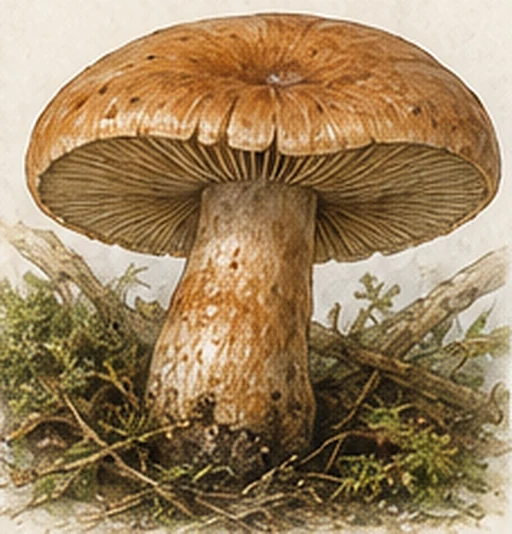
Deadly poisonous: the orellanine it contains destroys the kidneys, and illness begins days or weeks after the meal, when nobody connects it with mushrooms any more.
A photograph cannot settle this pair, and it is the exact place where identification by picture fails. Chanterelles are photographed from above, and the mark that separates them, ridges against true gills, is underneath; orange and rust-brown also photograph much alike under a canopy. Being wrong here means kidney failure that begins far too late to be linked to the meal.
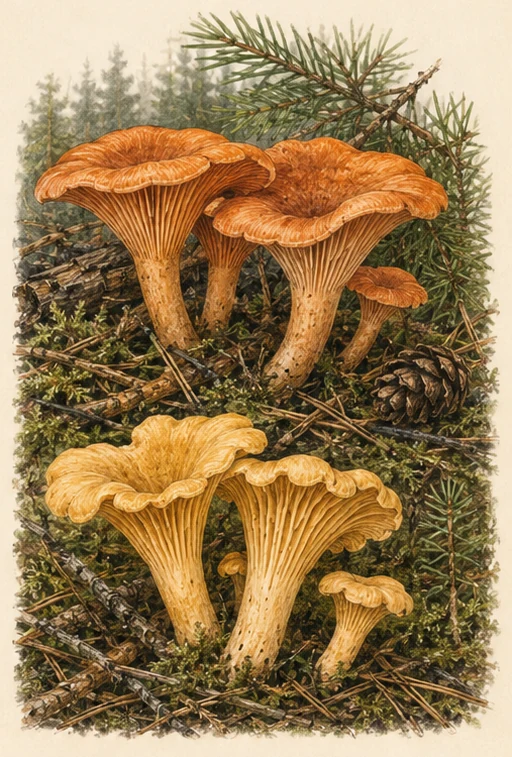
Not regarded as poisonous, but it disagrees with some people and is treated as inedible.
- ·Turn the mushroom over: a Chanterelle has thick, blunt, forked ridges running down onto the stem, while False Chanterelle has thin, crowded, blade-like true gills that fork repeatedly.
- ·False Chanterelle is soft and its flesh tears; a Chanterelle is firm and snaps cleanly.
- ·The colour of False Chanterelle is graded, with a brighter orange margin and a browner centre, whereas a Chanterelle is an even egg-yellow to apricot throughout.
- ·In the Mediterranean and the warmer south the more serious orange look-alike is Jack o' Lantern (Omphalotus olearius), which is poisonous, has true gills and grows in dense clumps from stumps, buried roots and olive wood rather than singly from soil.
Check whether this one is out near you
The foraging forecast changes daily — with rainfall, temperature and the phase of the flush, rather than «it ought to be the season».
Your comment
No sign-up. A question, a correction, an observation — all welcome.
Updated from the FungRadar species reference · not a specialist's determination