
Saffron MilkcapLactarius deliciosus
Traditionally collected in: Spain, France, Poland, Russia, Belarus and Lithuania

Description
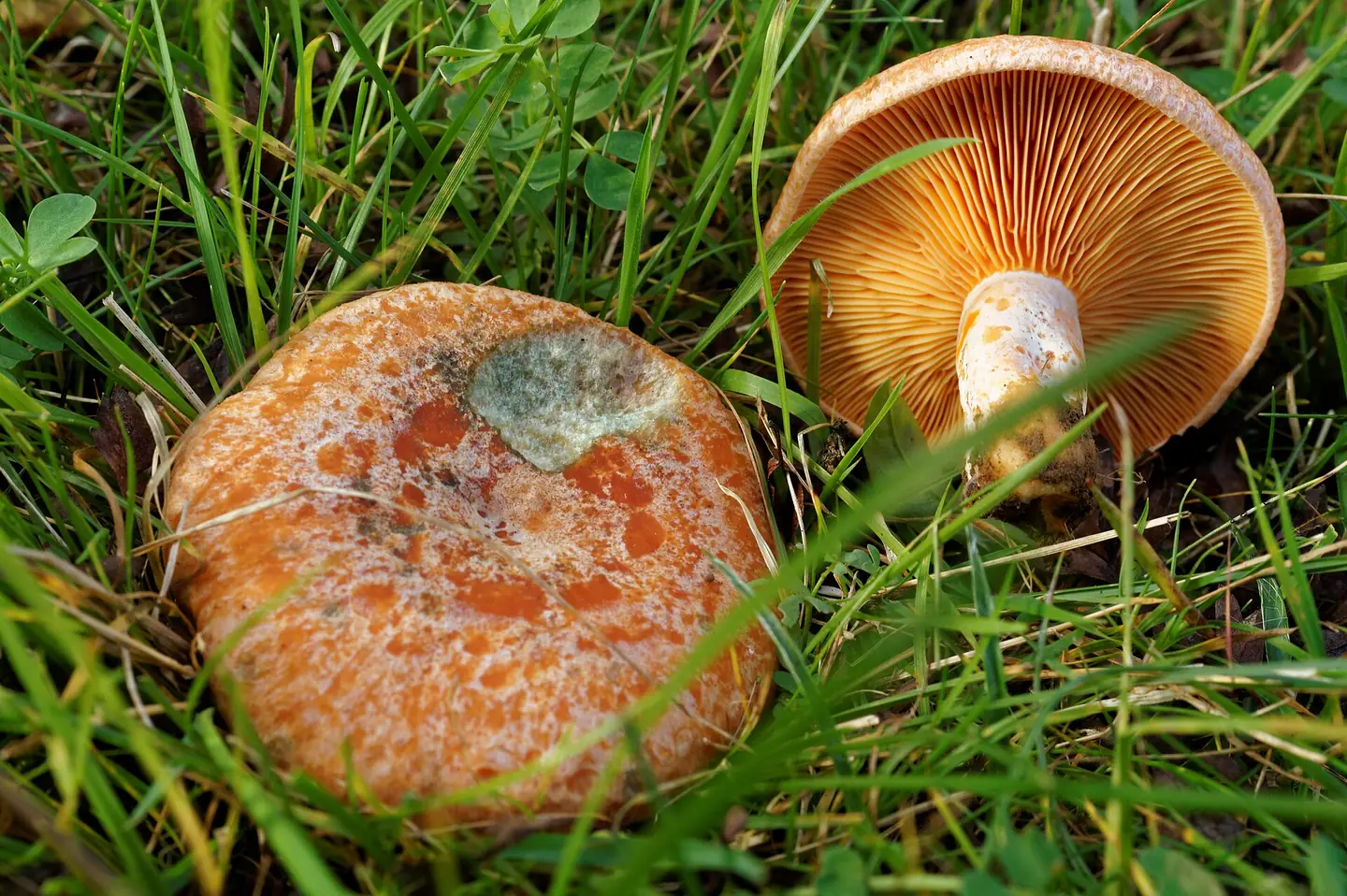
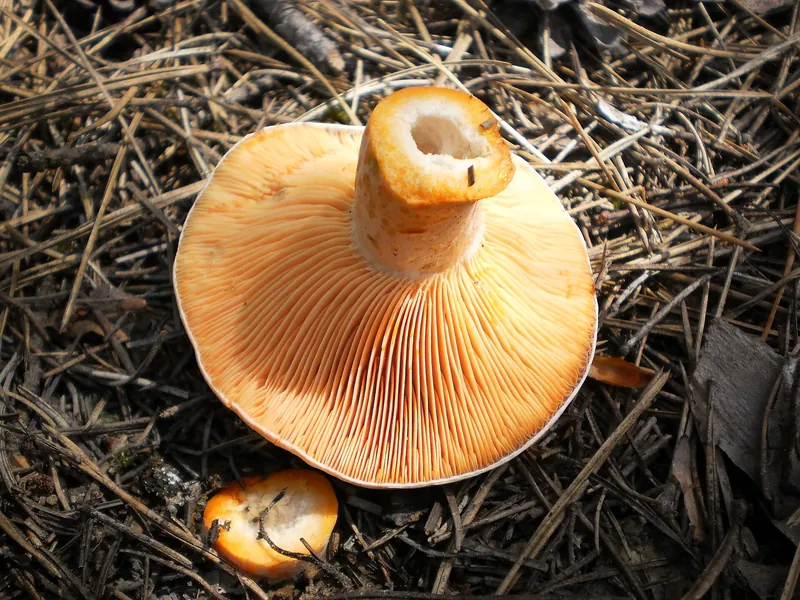
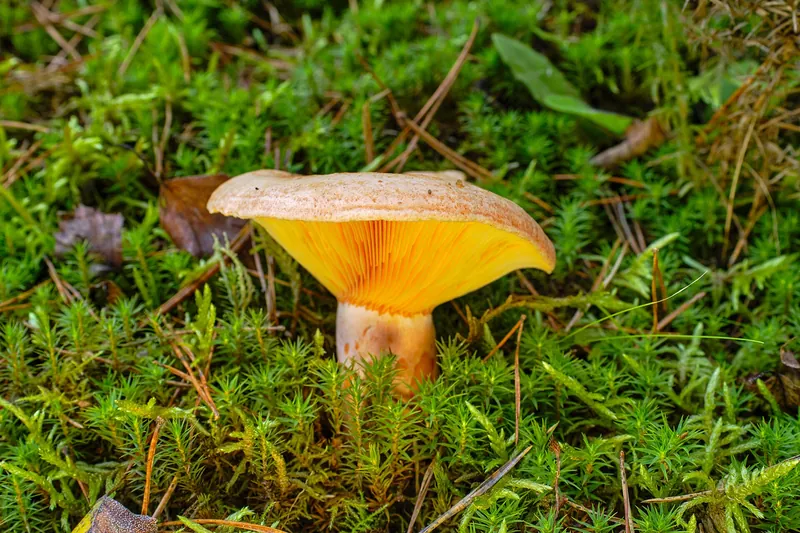
An orange cap marked with darker concentric rings. Bruised areas often turn green. The orange latex is one of the most useful identification features.
Where it grows
Associated with conifers, especially pine, in plantations, woodland edges, grass and moss.
Mainly from late summer into autumn after wet weather.
«Saffron Milkcap — or something like it?»
If the description above leaves you unsure, do not guess from memory and do not compare by eye with a picture off the internet. Our photo identifier shows several likely candidates with percentages, and names the dangerous lookalikes if there are any — rather than one confident answer.
In detail
Season
Fruits from early August to early November.
What to do with it
This species may not be picked (see «Caution» below), so storing and cooking do not belong here. If you find one: photograph it where it stands, do not cut or dig it up, and remember the spot for your own records — the mycelium fruits there year after year.
Take care
Edible when correctly identified. When cut, it produces orange latex that slowly develops greenish tones. This is a useful feature, but do not taste unknown milkcaps as an identification test. Several related Lactarius species can look similar.
Nothing on this page is an expert opinion, and nothing here confirms that the mushroom you found is edible. Photo identification in this service is a probabilistic hint, not permission to pick or to eat.
Lookalikes
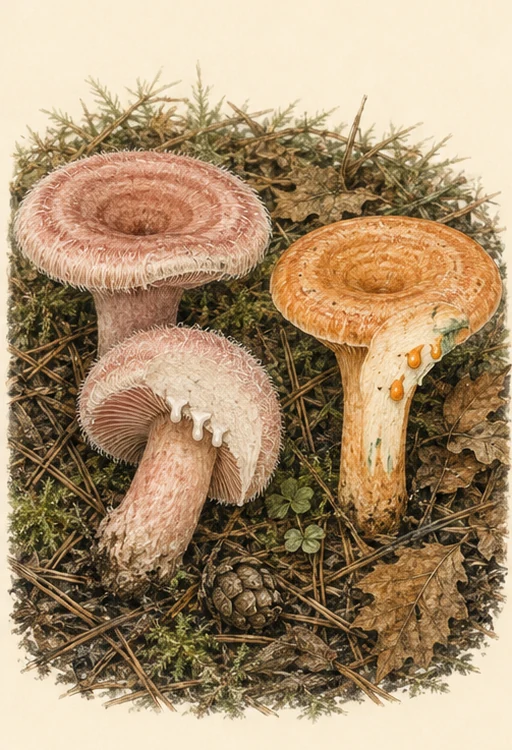
Sharply acrid and, raw or insufficiently processed, the cause of violent stomach upset; most European books treat it as inedible.
- ·Break the flesh and look at the latex: Saffron Milkcap bleeds carrot-orange milk that turns dull green over some minutes, while Woolly Milkcap bleeds white milk that stays white.
- ·The cap margin of Woolly Milkcap is inrolled and densely shaggy-hairy; Saffron Milkcap has a smooth margin and darker concentric rings across the cap.
- ·Cut flesh of Saffron Milkcap is orange to carrot-coloured inside and bruises green; Woolly Milkcap is white inside.
- ·Woolly Milkcap grows with birch and Saffron Milkcap with pine and other conifers, and that association holds across Europe.
Check whether this one is out near you
The foraging forecast changes daily — with rainfall, temperature and the phase of the flush, rather than «it ought to be the season».
Your comment
No sign-up. A question, a correction, an observation — all welcome.
Updated from the FungRadar species reference · not a specialist's determination