
Bay BoleteImleria badia
Traditionally collected in: Poland, Czechia, Germany, Russia and Belarus
Description
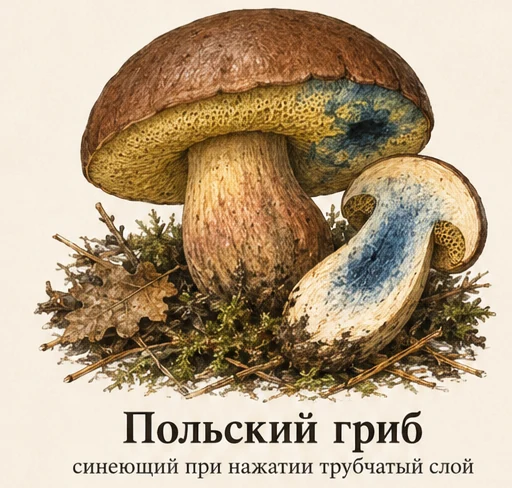
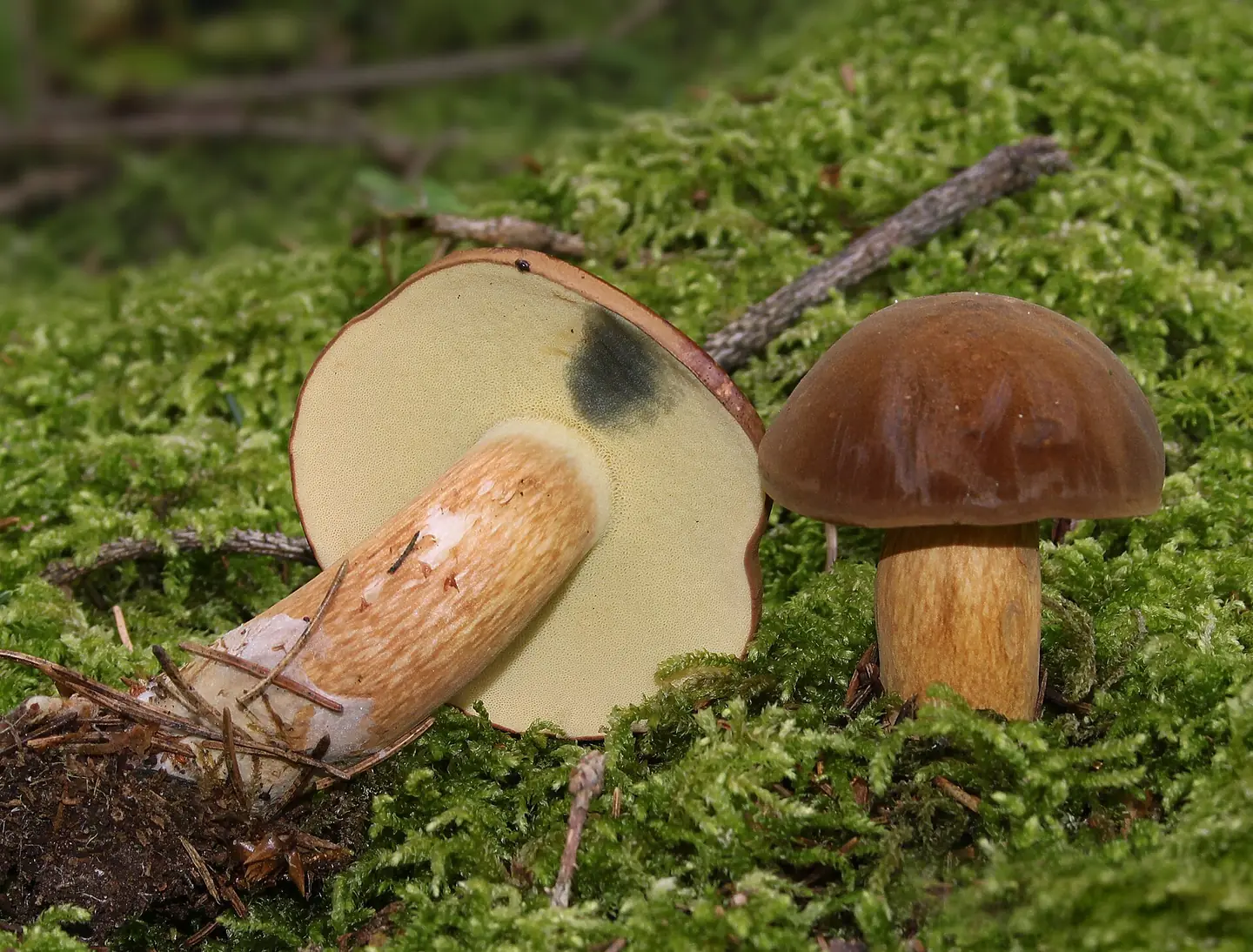
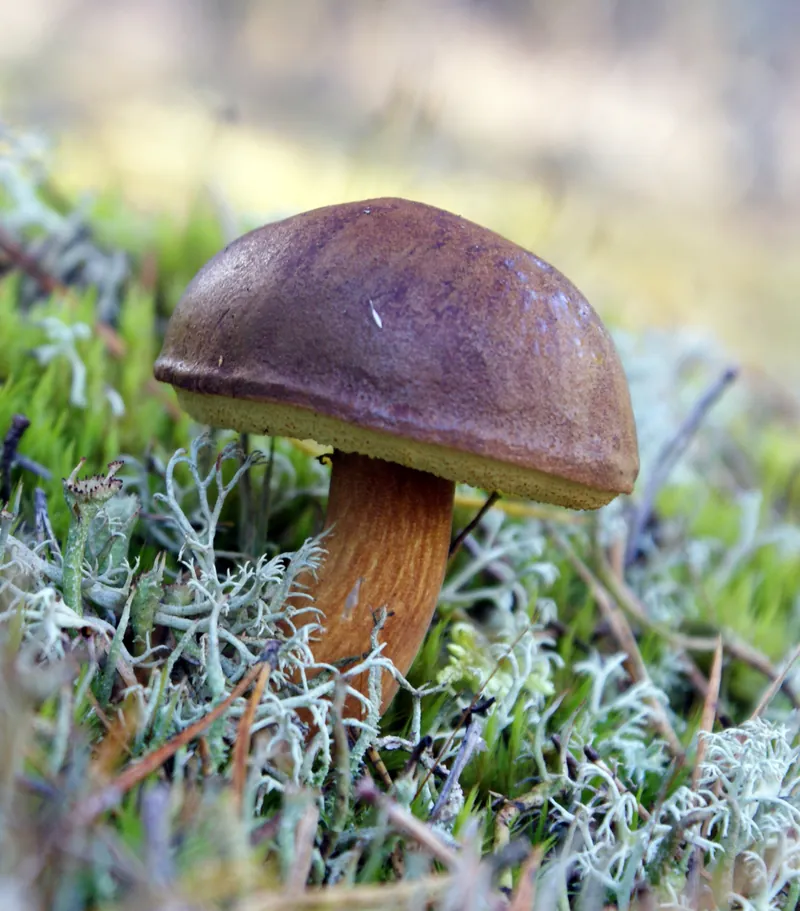
The cap is chestnut to bay brown, usually dry or slightly velvety. The pores are pale when young and bruise blue-green when pressed. The stem is fairly even and lacks the raised net-like pattern seen on Penny Bun.
Where it grows
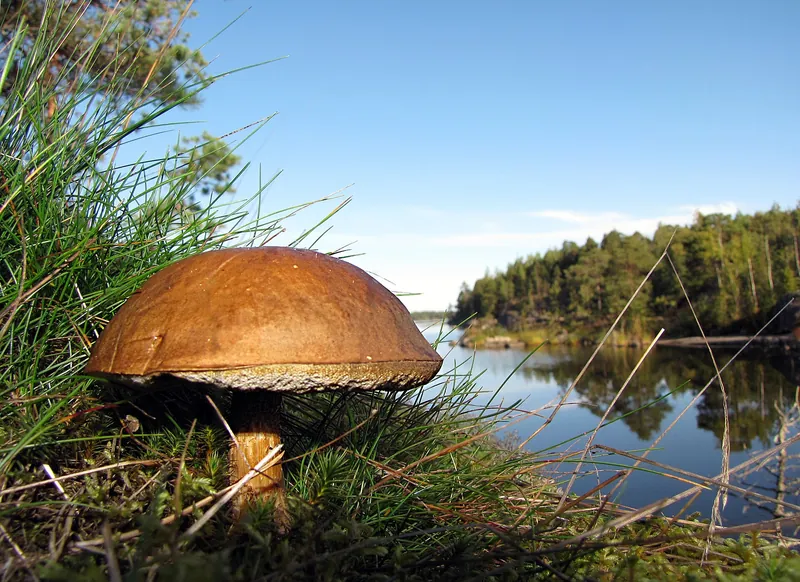
Mostly in coniferous woodland, especially with pine and spruce, often among moss and leaf litter. Widespread across Europe.
From summer into autumn, often fruiting well after periods of sustained rain and continuing into relatively cool weather.
«Bay Bolete — or something like it?»
If the description above leaves you unsure, do not guess from memory and do not compare by eye with a picture off the internet. Our photo identifier shows several likely candidates with percentages, and names the dangerous lookalikes if there are any — rather than one confident answer.
In detail
Season
Fruits from early July to mid November.
What to do with it
This species may not be picked (see «Caution» below), so storing and cooking do not belong here. If you find one: photograph it where it stands, do not cut or dig it up, and remember the spot for your own records — the mycelium fruits there year after year.
Take care
Edible when correctly identified and cooked. The pores and flesh may turn blue when bruised or cut; this is normal. Bay Bolete can accumulate radiocaesium more readily than some other boletes. In areas where local authorities issue advice about radioactive contamination, follow that advice and consider choosing other species. Avoid polluted ground such as roadsides and former industrial sites.
Nothing on this page is an expert opinion, and nothing here confirms that the mushroom you found is edible. Photo identification in this service is a probabilistic hint, not permission to pick or to eat.
Lookalikes
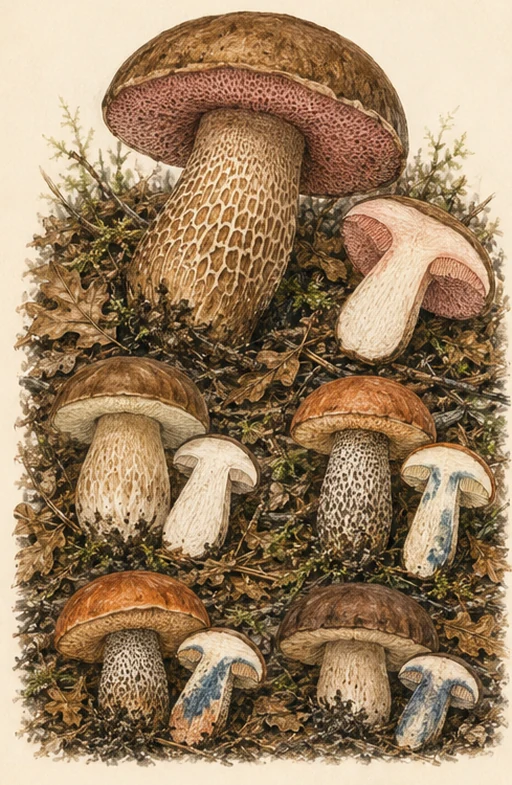
Not poisonous, but intensely bitter, and no method of cooking removes it.
- ·Press the pore surface with a thumb: Bay Bolete stains blue-green within seconds, while Bitter Bolete does not blue at all and instead goes pink with age.
- ·The stem of Bay Bolete is plain and finely brown-fibrous with no net; Bitter Bolete carries a coarse dark net towards the top.
- ·Cut flesh of Bay Bolete blues faintly and then fades, whereas that of Bitter Bolete flushes pink and never blues.
- ·Both occur in conifer woodland on acid soil and can be found beside the same path, so the check is made on each mushroom rather than on the patch.
Check whether this one is out near you
The foraging forecast changes daily — with rainfall, temperature and the phase of the flush, rather than «it ought to be the season».
Your comment
No sign-up. A question, a correction, an observation — all welcome.
Updated from the FungRadar species reference · not a specialist's determination