
PanthercapAmanita pantherina
Deadly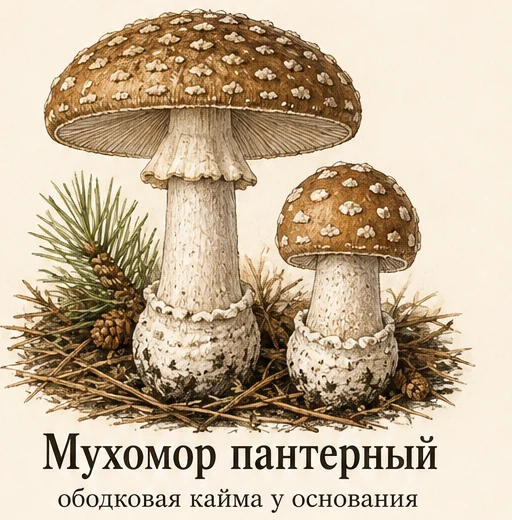
Description
The cap is grey-brown to dark brown with small white patches. The gills are white. There is usually a ring on the stem and a bulbous base with a distinct rim or collar. The plain brown cap makes it less obvious than Fly Agaric.
Where it grows
Mostly in broadleaved and mixed woodland, often on light or sandy soils.
Mainly from summer into autumn. Timing varies with climate and latitude.
«Panthercap — or something like it?»
If the description above leaves you unsure, do not guess from memory and do not compare by eye with a picture off the internet. Our photo identifier shows several likely candidates with percentages, and names the dangerous lookalikes if there are any — rather than one confident answer.
In detail
Season
Fruits from mid July to mid October.
What to do with it
This species may not be picked (see «Caution» below), so storing and cooking do not belong here. If you find one: photograph it where it stands, do not cut or dig it up, and remember the spot for your own records — the mycelium fruits there year after year.
Take care
Highly poisonous and potentially fatal. Poisoning can cause severe neurological symptoms and requires urgent medical attention. Panthercap can be confused with the edible Blusher and with young mushrooms of other species. Do not collect it for food.
Nothing on this page is an expert opinion, and nothing here confirms that the mushroom you found is edible. Photo identification in this service is a probabilistic hint, not permission to pick or to eat.
Lookalikes
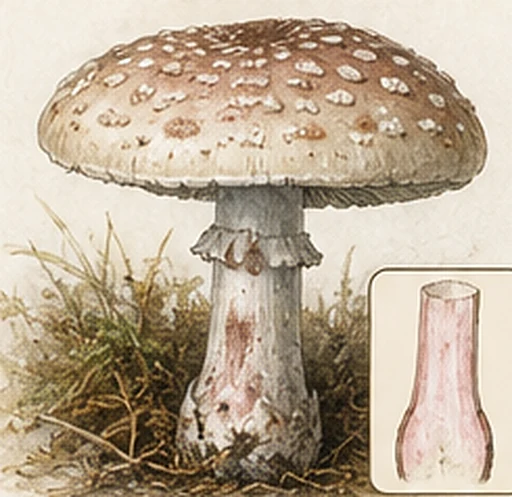
European books treat the Blusher as edible only after thorough cooking, and the danger here runs the other way round: Panthercap is taken for it, not it for Panthercap.
A photograph cannot settle this pair, and here that matters in reverse: the risk is not eating the look-alike but taking a Panthercap for it. The pink flush takes minutes to appear in broken flesh and does not exist in a photograph at all, and the collar at the stem base is under the soil until the mushroom is dug.
Check whether this one is out near you
The foraging forecast changes daily — with rainfall, temperature and the phase of the flush, rather than «it ought to be the season».
Your comment
No sign-up. A question, a correction, an observation — all welcome.
Updated from the FungRadar species reference · not a specialist's determination