
Wood BlewitCollybia nuda
- Formerly:
- Lepista nuda
Traditionally collected in: the United Kingdom, France, Italy and Russia
Description
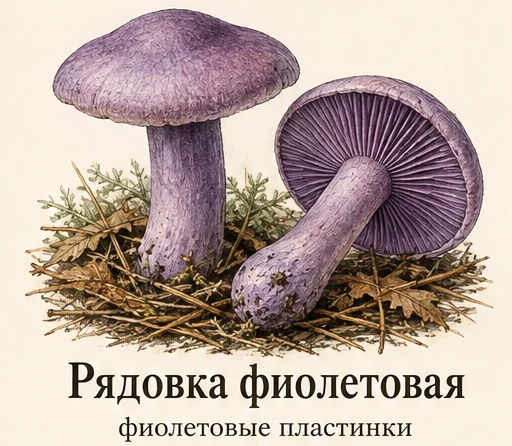
Fresh specimens are violet to lilac across the cap, gills and stem, fading towards buff or brown with age. The spore print is pale rather than rusty brown. The smell is often sweet or fruity.
Where it grows
In leaf litter in broadleaved and mixed woodland, hedgerows, parks and piles of decaying leaves.
Mostly from autumn into early winter, often continuing until hard frosts.
«Wood Blewit — or something like it?»
If the description above leaves you unsure, do not guess from memory and do not compare by eye with a picture off the internet. Our photo identifier shows several likely candidates with percentages, and names the dangerous lookalikes if there are any — rather than one confident answer.
In detail
Season
Fruits from early September to late November.
What to do with it
This species may not be picked (see «Caution» below), so storing and cooking do not belong here. If you find one: photograph it where it stands, do not cut or dig it up, and remember the spot for your own records — the mycelium fruits there year after year.
Take care
Edible when correctly identified and thoroughly cooked; do not eat it raw. Several violet webcaps can look similar, and some Cortinarius species are seriously poisonous. Rusty-brown spore deposits or a cobweb-like veil are warning signs, but beginners should not use the absence of those features as proof that a mushroom is a Blewit.
This species is easily confused with Cortinarius rubellus — see the lookalikes section below. Pick only what has been confirmed by someone who knows the fungi of your area.
Nothing on this page is an expert opinion, and nothing here confirms that the mushroom you found is edible. Photo identification in this service is a probabilistic hint, not permission to pick or to eat.
Lookalikes
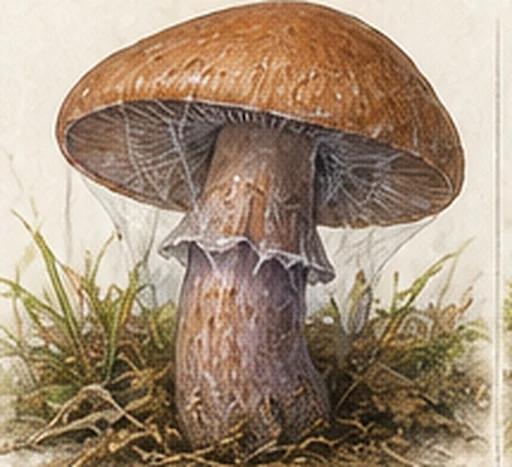
Deadly poisonous: orellanine attacks the kidneys, and there may be no symptoms at all for days or weeks.
A photograph cannot settle this pair. It cannot show spore colour, and on a young specimen it loses the cobweb veil, which is a few fine threads that disappear against a dark gill face. Anyone gathering lilac mushrooms takes a spore deposit before eating, and no image substitutes for it.
Check whether this one is out near you
The foraging forecast changes daily — with rainfall, temperature and the phase of the flush, rather than «it ought to be the season».
Your comment
No sign-up. A question, a correction, an observation — all welcome.
Updated from the FungRadar species reference · not a specialist's determination