
Fly AgaricAmanita muscaria
Toxic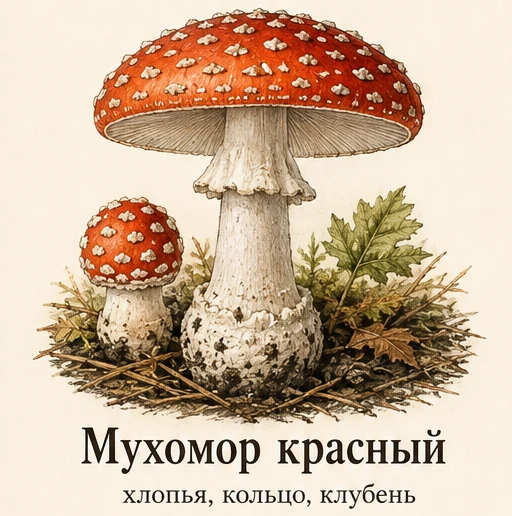
Description
Usually easy to recognise: a red to orange-red cap with white patches, white gills, a ring on the stem and a swollen base with scaly bands. Heavy rain can wash the white patches away, leaving a plain red cap.
Where it grows
Common with birch, pine and spruce. It often grows in the same woodland as Penny Bun because the two species can share host trees.
Mostly from late summer into autumn, sometimes continuing until the first hard frosts.
«Fly Agaric — or something like it?»
If the description above leaves you unsure, do not guess from memory and do not compare by eye with a picture off the internet. Our photo identifier shows several likely candidates with percentages, and names the dangerous lookalikes if there are any — rather than one confident answer.
In detail
Season
Fruits from early August to early November.
What to do with it
This species may not be picked (see «Caution» below), so storing and cooking do not belong here. If you find one: photograph it where it stands, do not cut or dig it up, and remember the spot for your own records — the mycelium fruits there year after year.
Take care
Poisonous. It contains ibotenic acid and muscimol and can cause nausea, confusion, agitation, drowsiness and other neurological symptoms. The strength varies between fruitbodies, so appearance does not predict toxicity.
This species is easily confused with Amanita pantherina — see the lookalikes section below. Pick only what has been confirmed by someone who knows the fungi of your area.
Nothing on this page is an expert opinion, and nothing here confirms that the mushroom you found is edible. Photo identification in this service is a probabilistic hint, not permission to pick or to eat.
Lookalikes
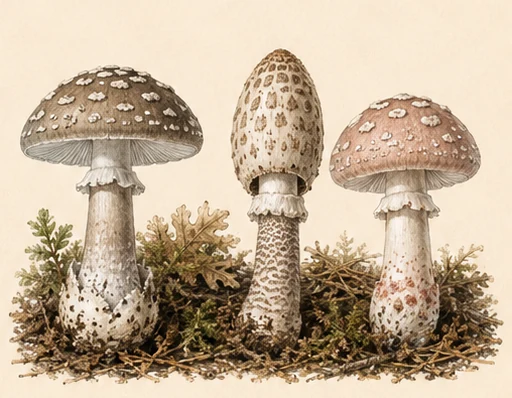
Highly poisonous and potentially fatal, with severe neurological effects.
A photograph cannot settle this pair. Cap colour is the one thing a picture shows reliably, and cap colour is exactly what rain, sun and age take away. The mark that matters, the shape of the stem base and whether it carries a collar, is underground until the mushroom is dug up.
Check whether this one is out near you
The foraging forecast changes daily — with rainfall, temperature and the phase of the flush, rather than «it ought to be the season».
Your comment
No sign-up. A question, a correction, an observation — all welcome.
Updated from the FungRadar species reference · not a specialist's determination