
Weeping BoleteSuillus granulatus
Traditionally collected in: Russia, Belarus, Poland and Italy
Description
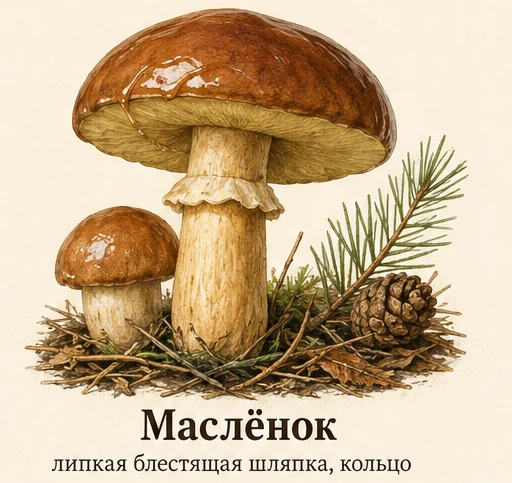
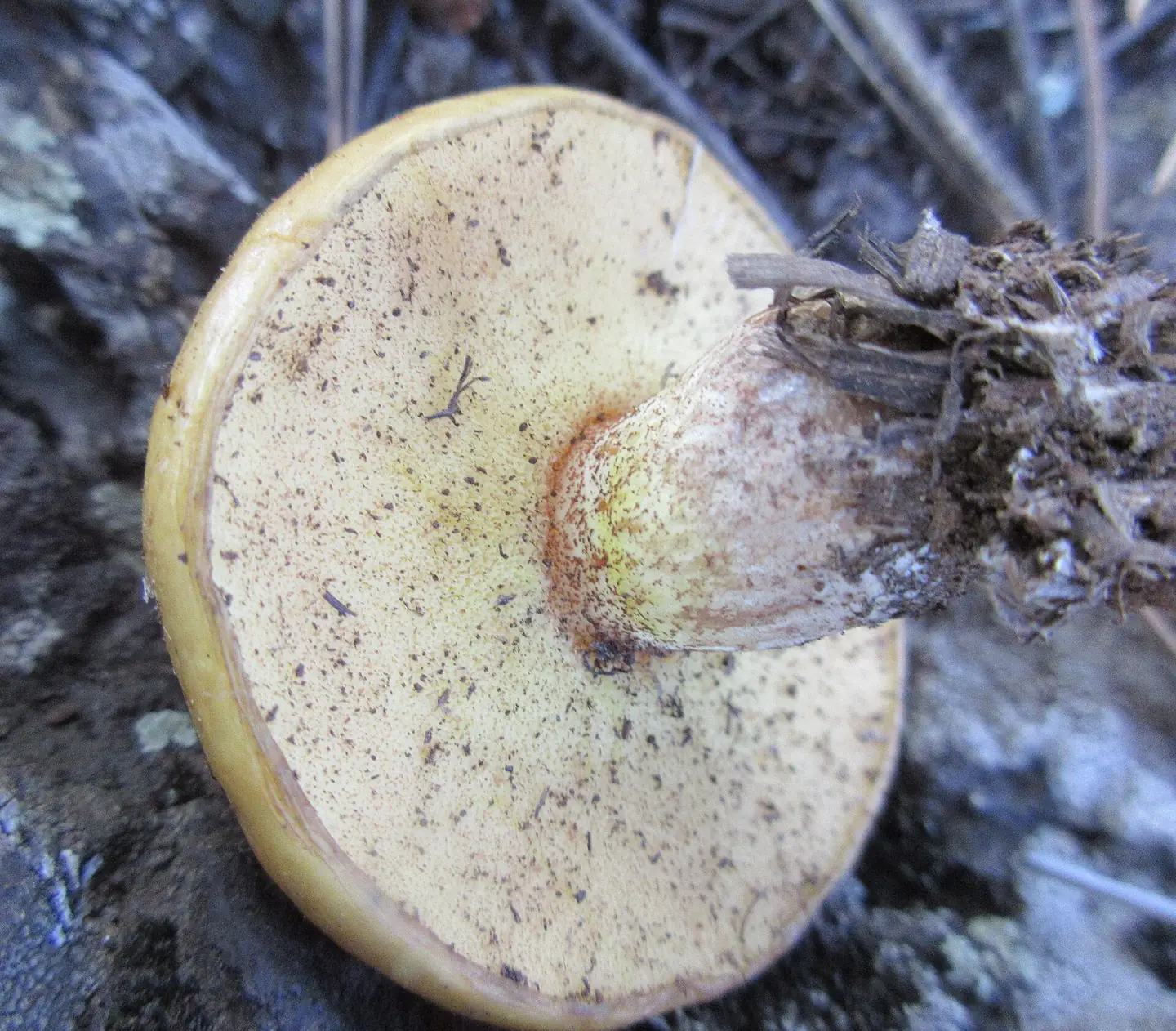
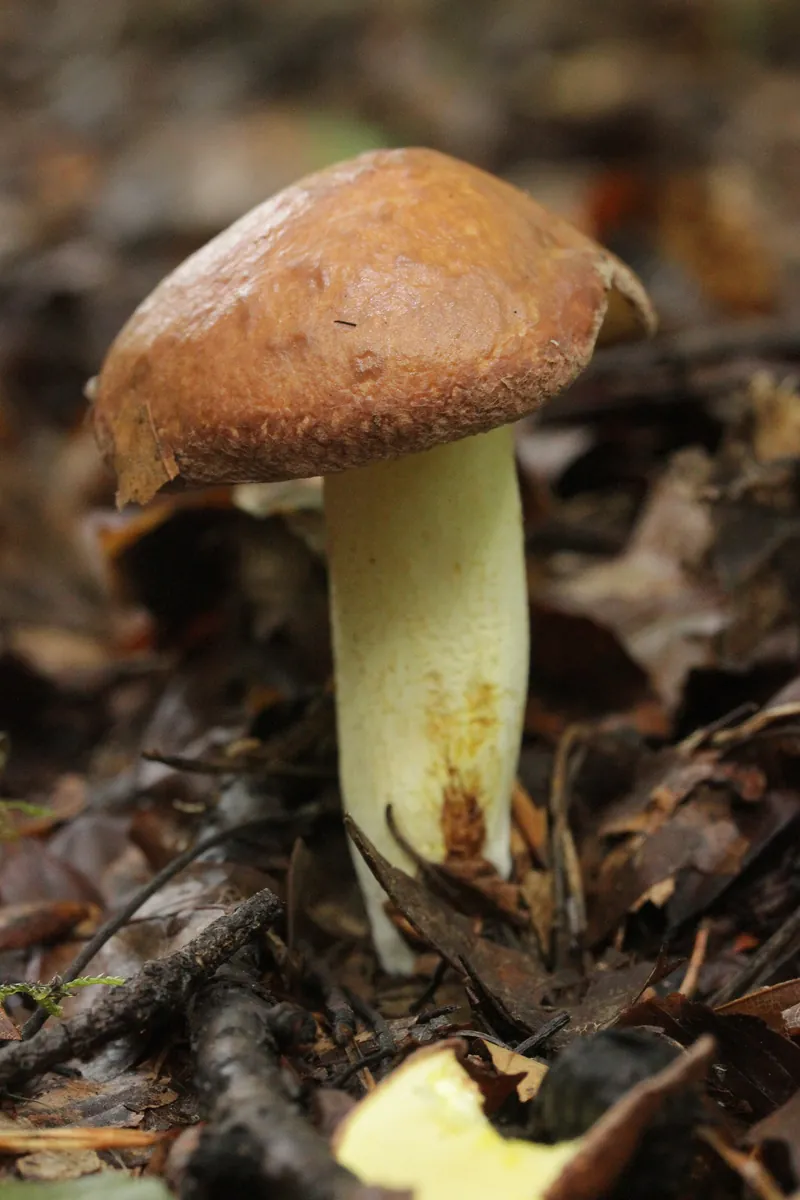
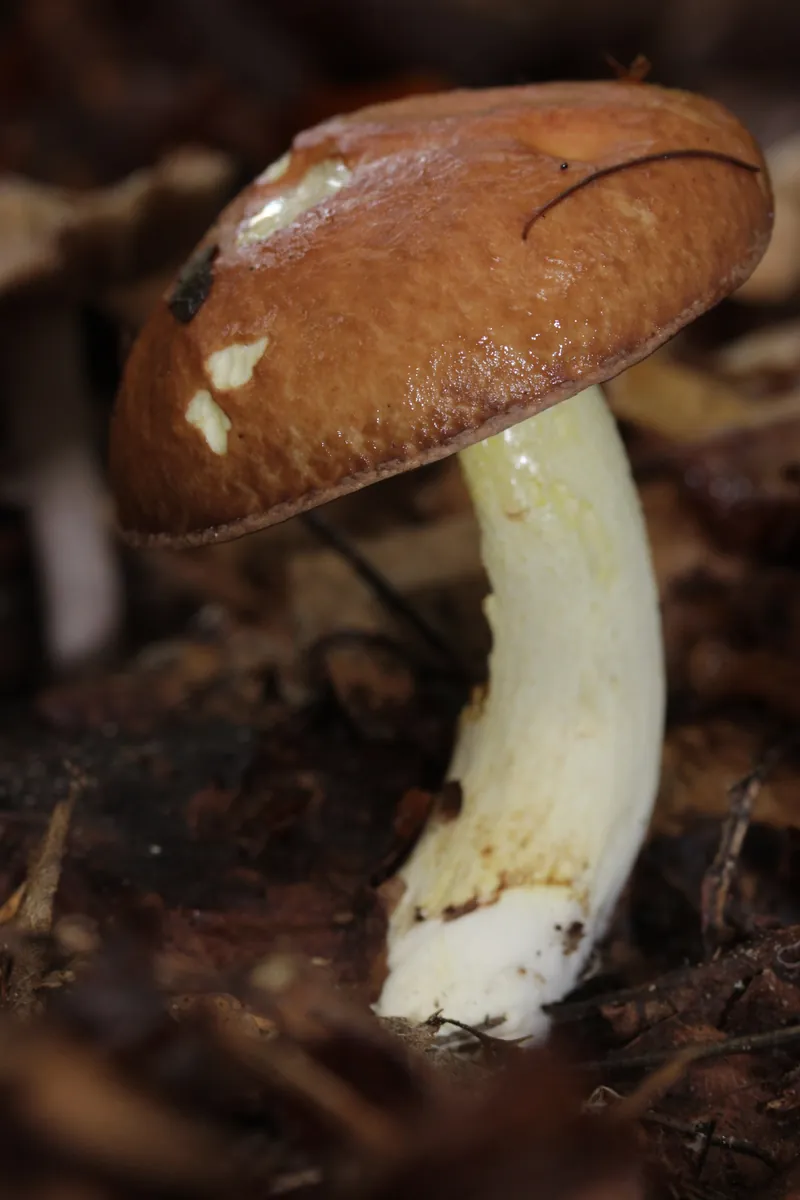
A yellow-brown to orange-brown cap that is sticky in wet weather. The pores are yellow and young specimens may produce small milky droplets. The stem has no ring.
Where it grows
Closely associated with pine, especially in plantations, heaths and woodland edges.
From late spring or summer into autumn, often in several flushes after rain.
«Weeping Bolete — or something like it?»
If the description above leaves you unsure, do not guess from memory and do not compare by eye with a picture off the internet. Our photo identifier shows several likely candidates with percentages, and names the dangerous lookalikes if there are any — rather than one confident answer.
In detail
Season
Fruits from early August to late November.
What to do with it
This species may not be picked (see «Caution» below), so storing and cooking do not belong here. If you find one: photograph it where it stands, do not cut or dig it up, and remember the spot for your own records — the mycelium fruits there year after year.
Take care
Edible when correctly identified and cooked. Some people find Suillus species difficult to digest. Peeling the sticky cap skin is common for texture and preparation, but it should not be treated as a safety test.
Nothing on this page is an expert opinion, and nothing here confirms that the mushroom you found is edible. Photo identification in this service is a probabilistic hint, not permission to pick or to eat.
Lookalikes
Edible and rated on a par with the Weeping Bolete; confusing the two is not dangerous. Both are hard on the digestion of some people.
- ·The ring: Slippery Jack has a white or lilac-brown membranous ring on the stem, the remains of a partial veil; the Weeping Bolete never has a ring at all.
- ·Stem: the Weeping Bolete is scattered above the tubes with brown granules like semolina; Slippery Jack is nearly smooth above the ring.
- ·A young Weeping Bolete exudes drops of milky white liquid from the pores, which Slippery Jack does not.
- ·Cap colour: darker in Slippery Jack, chocolate or lilac-brown; yellow-ochre to rusty brown in the Weeping Bolete.
Edible, and close in quality to the Weeping Bolete. There is no danger in this pair; the difference matters only for naming what you have.
- ·Scrape away the litter at the base of the stem: the mycelium of Suillus collinitus is pink and felted there, that of the Weeping Bolete white.
- ·No drops appear on the tubes of Suillus collinitus, whereas a young Weeping Bolete exudes drops of milky white liquid.
- ·The cap of Suillus collinitus is darker and marked with ingrown dark fibres, and the fruitbody is usually the larger of the two.
Inedible: the flesh is burning hot with pepper and the species carries toxins. One fruitbody is enough to spoil a whole pan.
- ·Colour of the pore surface: rust-coloured, reddish or rusty brown in the Peppery Bolete; pale yellow and later yellow-olive in the Weeping Bolete.
- ·Cut the bottom of the stem: in the Peppery Bolete the flesh is sulphur yellow and the mycelium beneath it bright yellow; in the Weeping Bolete the flesh is whitish-yellow and the mycelium white.
- ·Cap skin: strongly slimy in wet weather in the Weeping Bolete and peeling away in one sheet; dry or barely tacky in the Peppery Bolete, and it does not peel like that.
- ·Taste with the tip of the tongue and spit it out: burning hot in the Peppery Bolete, bland in the Weeping Bolete.
Edible, but rubbery-fleshed and rated lower. A mistake in this pair is culinary, not medical.
- ·Pores: large, angular, lattice-like and running down the stem in Bovine Bolete; small, round and stopping short of the stem in the Weeping Bolete.
- ·Stem: brown granules in the upper part in the Weeping Bolete; smooth and often bent in Bovine Bolete.
- ·Flesh: springy and rubbery in Bovine Bolete, and it may redden slightly when cut; soft in the Weeping Bolete, and it barely changes colour.
Check whether this one is out near you
The foraging forecast changes daily — with rainfall, temperature and the phase of the flush, rather than «it ought to be the season».
Your comment
No sign-up. A question, a correction, an observation — all welcome.
Updated from the FungRadar species reference · not a specialist's determination