
Fly Agaric in Tomsk Oblast: the week ahead
Amanita muscaria
The map below is built from the measurement network. A 2.5 km grid with a per-species layer is computed for one region so far.
Flush phase
- Quiet
- Starting
- Building
- Peak
- Fading
Updated 17 September 2026, 11:22 BST
7 days
Index, day by day
Week's best 49average 47by the weekend steady
Conditions stay poor all week — not worth the trip yet.
- Today4917 Sept
- Fri4818 Sept
- Sat4919 Sept
- Sun4720 Sept
- Mon4521 Sept
- Tue4622 Sept
- Wed4723 Sept
Map
Where to look: fly agaric
A field over the measurement network. The colour here is for the leading species at each point, not for this one; a per-species layer is computed for one region so far.
Fly Agaric in Tomsk Oblast: where to look
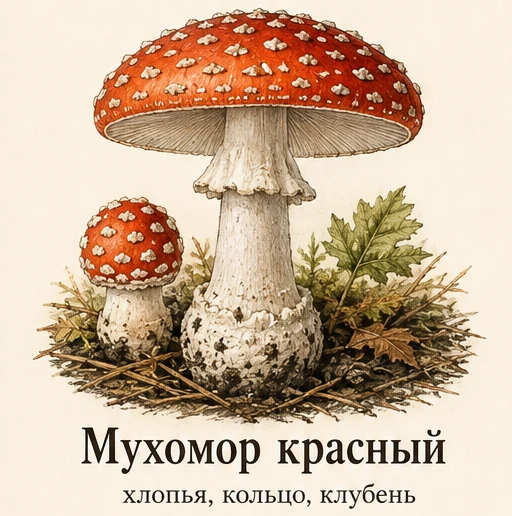
Fly Agaric: the species in brief
How to tell it
Usually easy to recognise: a red to orange-red cap with white patches, white gills, a ring on the stem and a swollen base with scaly bands. Heavy rain can wash the white patches away, leaving a plain red cap.
Where it grows
Common with birch, pine and spruce. It often grows in the same woodland as Penny Bun because the two species can share host trees.
This is a note about the species, not about what is in your basket. Full card with lookalikes →
What else is out here now
The other species in this region, by today's index.
Fly Agaric in neighbouring regions
A regional boundary means nothing to a mushroom, and the next region is sometimes closer than the far side of your own. The index is for today.