
Bay Bolete in Krasnodar Krai: the week ahead
Imleria badia
Flush phase
- Quiet
- Starting
- Building
- Peak
- Fading
Updated 17 September 2026, 11:22 BST
7 days
Index, day by day
Week's best 25 — on Wednesdayaverage 21by the weekend rising
Conditions are poor: even the week's best day only reaches «slow».
- Today2017 Sept
- Fri2118 Sept
- Sat2119 Sept
- Sun2020 Sept
- Mon2121 Sept
- Tue2222 Sept
- Wed2523 Sept
Map
Where to look: bay bolete
Bay Bolete in Krasnodar Krai: where to look
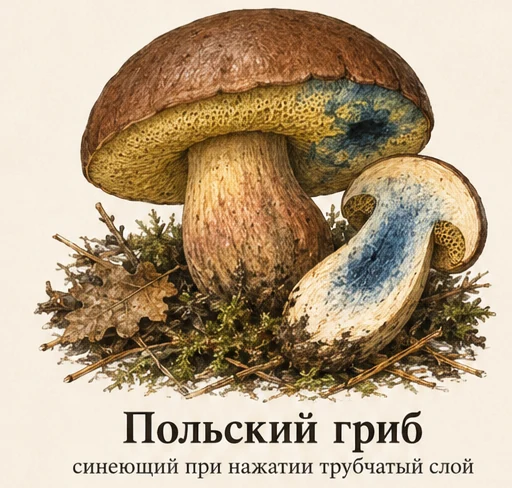
Bay Bolete: the species in brief
How to tell it
The cap is chestnut to bay brown, usually dry or slightly velvety. The pores are pale when young and bruise blue-green when pressed. The stem is fairly even and lacks the raised net-like pattern seen on Penny Bun.
Where it grows
Mostly in coniferous woodland, especially with pine and spruce, often among moss and leaf litter. Widespread across Europe.
In the kitchen
Good fried, dried or preserved. The blue colour usually fades during cooking.
Nutrition
Low in calories and a modest source of protein. Values vary with age, water content and growing conditions.
This is a note about the species, not about what is in your basket. Full card with lookalikes →
What else is out here now
The other species in this region, by today's index.
Bay Bolete in neighbouring regions
A regional boundary means nothing to a mushroom, and the next region is sometimes closer than the far side of your own. The index is for today.