
Field Mushroom in Kabardino-Balkaria: the week ahead
Agaricus campestris
The map below is built from the measurement network. A 2.5 km grid with a per-species layer is computed for one region so far.
Flush phase
- Quiet
- Starting
- Building
- Peak
- Fading
Updated 17 September 2026, 11:22 BST
7 days
Index, day by day
Week's best 54 — on Wednesdayaverage 47by the weekend rising
Conditions are best on Wednesday.
- Today3617 Sept
- Fri4018 Sept
- Sat4619 Sept
- Sun4920 Sept
- Mon5121 Sept
- Tue5322 Sept
- Wed5423 Sept
Map
Where to look: field mushroom
A field over the measurement network. The colour here is for the leading species at each point, not for this one; a per-species layer is computed for one region so far.
Field Mushroom in Kabardino-Balkaria: where to look
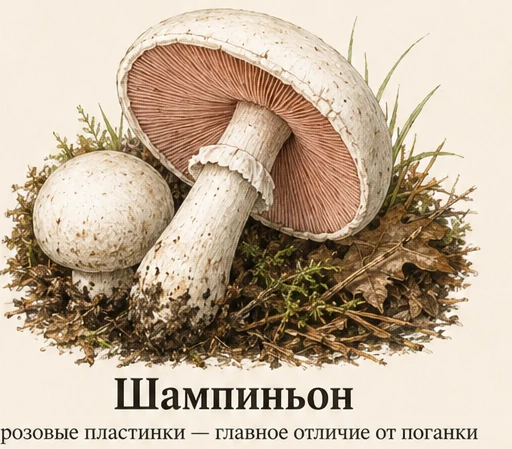
Field Mushroom: the species in brief
How to tell it
A white to cream cap with pink gills when young, darkening with age. The stem has a small ring, which may become faint or disappear on older specimens.
Where it grows
On meadows, pasture, lawns, downland and field margins, especially on nutrient-rich grassland.
In the kitchen
Cook as you would a cultivated button mushroom: quickly fried, grilled or added to sauces. Wild specimens should be cooked rather than eaten raw.
Nutrition
Low in calories and relatively high in protein for a fresh mushroom.
This is a note about the species, not about what is in your basket. Full card with lookalikes →
What else is out here now
The other species in this region, by today's index.
Field Mushroom in neighbouring regions
A regional boundary means nothing to a mushroom, and the next region is sometimes closer than the far side of your own. The index is for today.