
Honey Fungus in Jugovzhodna Slovenija: the week ahead
Armillaria mellea
The map below is built from the measurement network. A 2.5 km grid with a per-species layer is computed for one region so far.
Flush phase
- Quiet
- Starting
- Building
- Peak
- Fading
Updated 17 September 2026, 11:22 BST
7 days
Index, day by day
Week's best 67 — on Tuesdayaverage 63by the weekend rising
Conditions are best on Tuesday.
- Today5817 Sept
- Fri5818 Sept
- Sat6019 Sept
- Sun6420 Sept
- Mon6621 Sept
- Tue6722 Sept
- Wed6723 Sept
Numbers are taken at the measurement point nearest the centre of the region — a real calculation at one place, not an average over the area.
Map
Where to look: honey fungus
A field over the measurement network. The colour here is for the leading species at each point, not for this one; a per-species layer is computed for one region so far.
Honey Fungus in Jugovzhodna Slovenija: where to look
Honey Fungus: the species in brief
How to tell it
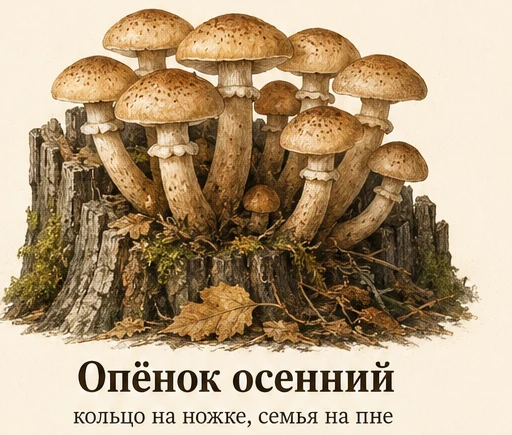
Usually grows in dense clusters on stumps, roots or the base of trees. The cap is honey-brown with fine darker scales. A. mellea normally has a ring on the stem and a white spore print.
Where it grows
On living and dead trees, stumps and buried roots. Across much of western Europe it is better known as a serious tree pathogen than as a food mushroom.
In the kitchen
Regional traditions differ. Where it is eaten, follow preparation advice from a local source rather than any single universal cooking time.
Nutrition
Low in calories. It can be relatively heavy to digest.
This is a note about the species, not about what is in your basket. Full card with lookalikes →
What else is out here now
The other species in this region, by today's index.
Honey Fungus in neighbouring regions
A regional boundary means nothing to a mushroom, and the next region is sometimes closer than the far side of your own. The index is for today.