
Penny Bun in Algarve: the week ahead
Boletus edulis
The map below is built from the measurement network. A 2.5 km grid with a per-species layer is computed for one region so far.
Flush phase
- Quiet
- Starting
- Building
- Peak
- Fading
Updated 18 September 2026, 11:37 BST
7 days
Index, day by day
Week's best 7average 6by the weekend steady
Conditions stay poor all week — not worth the trip yet.
- Today718 Sept
- Sat719 Sept
- Sun720 Sept
- Mon621 Sept
- Tue622 Sept
- Wed623 Sept
- Thu624 Sept
Numbers are taken at the measurement point nearest the centre of the region — a real calculation at one place, not an average over the area.
Map
Where to look: penny bun
A field over the measurement network. The colour here is for the leading species at each point, not for this one; a per-species layer is computed for one region so far.
Penny Bun in Algarve: where to look
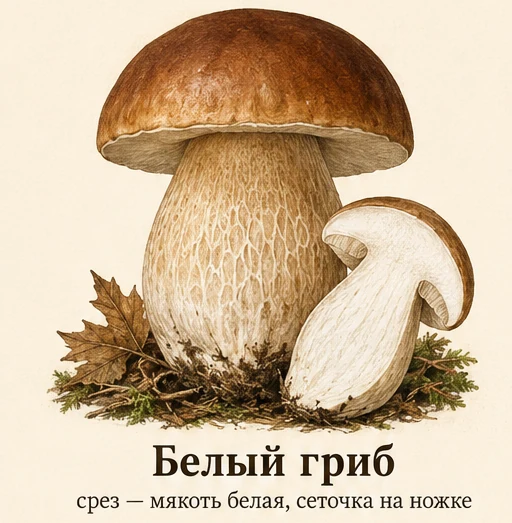
Penny Bun: the species in brief
How to tell it
A heavy, solid bolete with a brown cap and a thick stem. Near the top of the stem is a pale, raised net-like pattern. The pores are white when young, then become yellowish and finally olive with age.
Where it grows
With pine, spruce, oak, beech and other host trees, in woodland and along rides and clearings. Widespread across Europe.
In the kitchen
Excellent fried and especially good dried. Drying concentrates its aroma, which is why dried porcini are widely used in stocks, sauces and risotto.
Nutrition
Around 30 kcal per 100 g fresh is a useful rough guide, but values vary. Drying greatly concentrates both nutrients and calories.
This is a note about the species, not about what is in your basket. Full card with lookalikes →
What else is out here now
The other species in this region, by today's index.
Penny Bun in neighbouring regions
A regional boundary means nothing to a mushroom, and the next region is sometimes closer than the far side of your own. The index is for today.